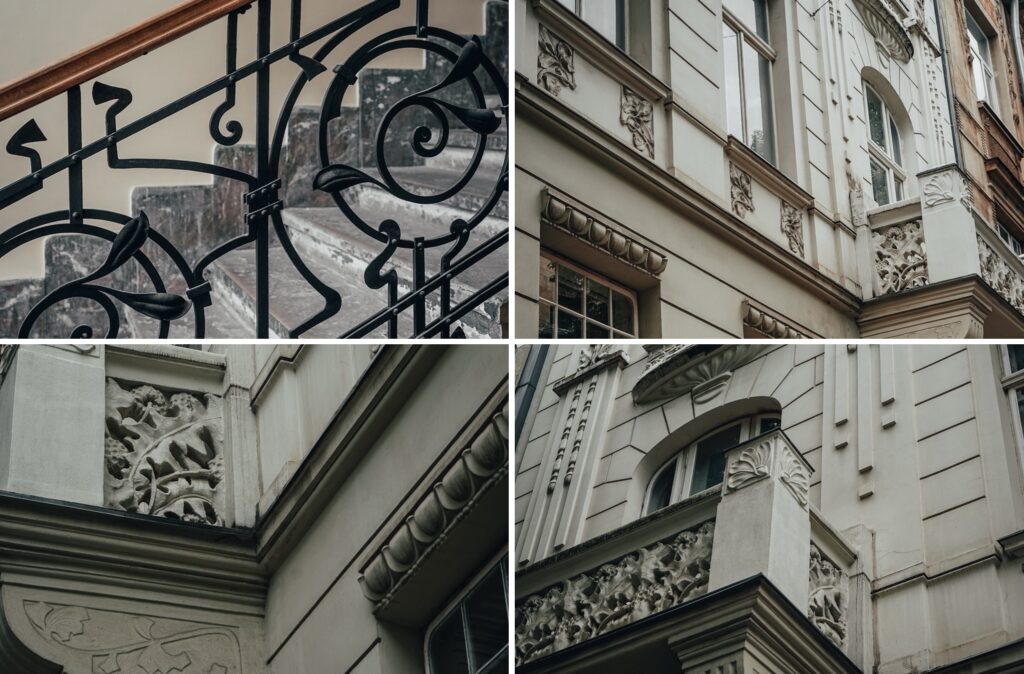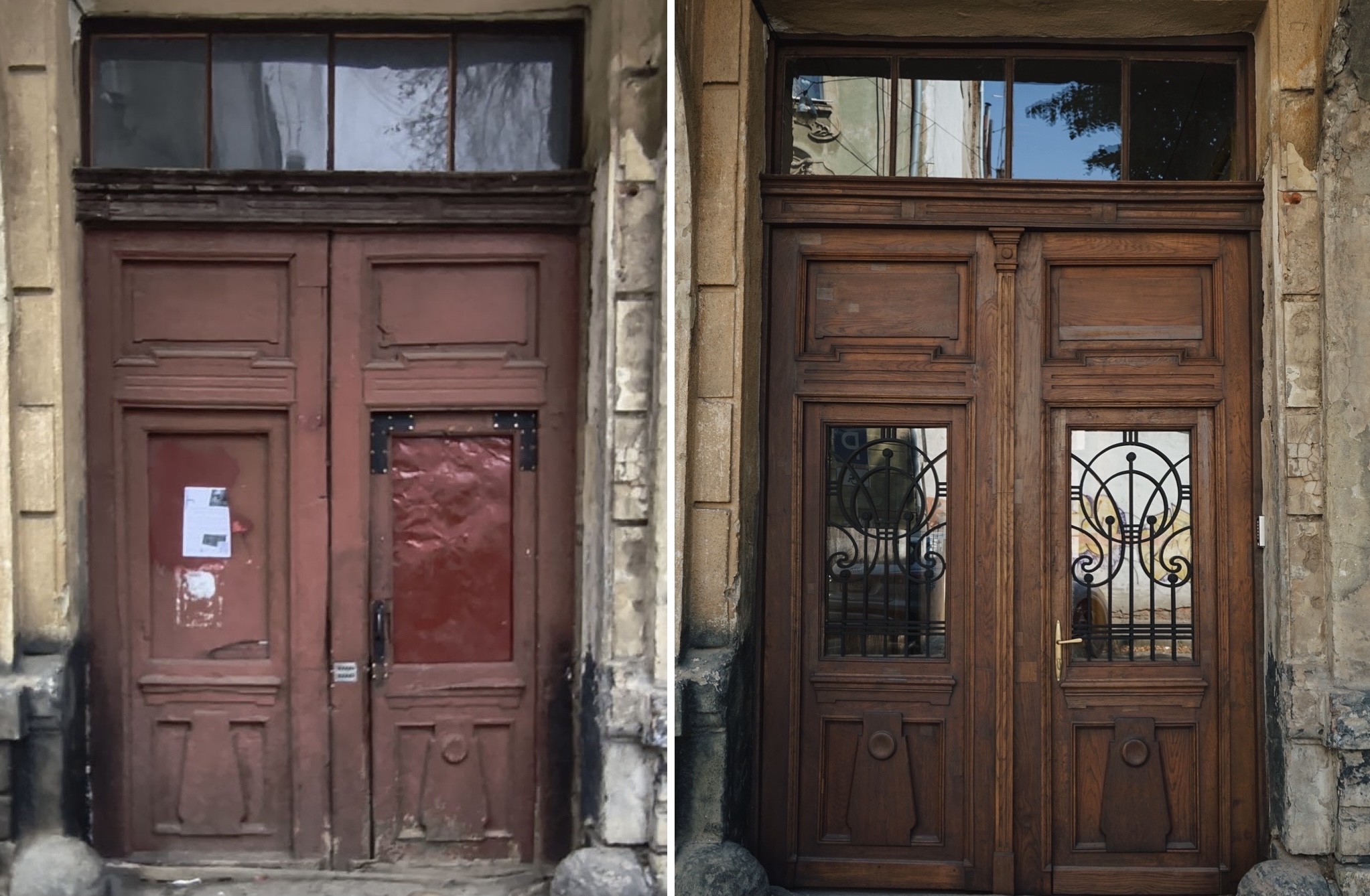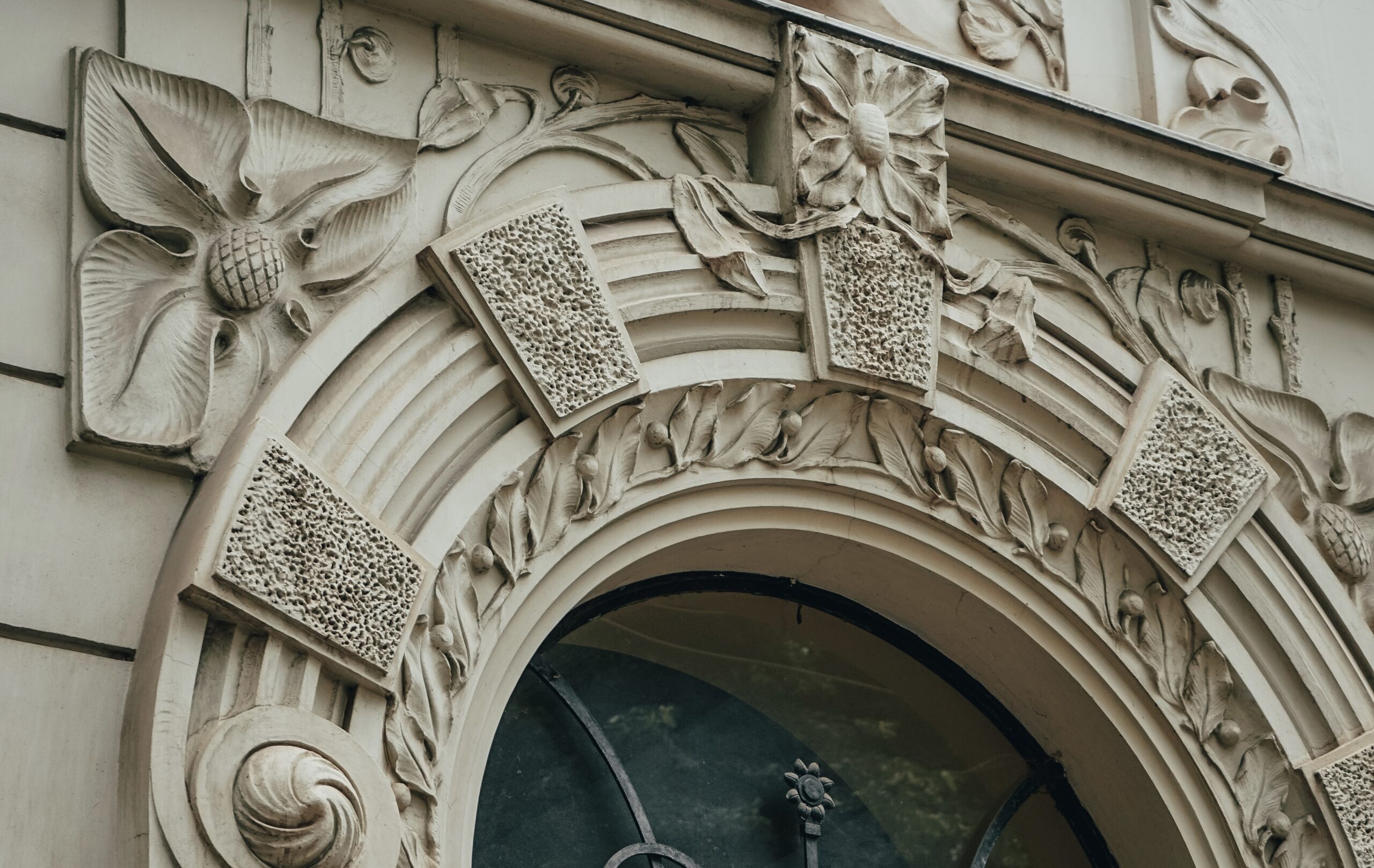
House No. 6 on Bohomoltsia Street is one of the architectural gems of Lviv Secession (Art Nouveau). The tenement house was built in 1906 as a rental property for entrepreneur Leon Stauber, based on a design by the architectural bureau of Ivan Levynskyi. The artistic decoration of the façade was created by architect Tadeusz Obmiński, one of the most talented representatives of Lviv Secession.
The building forms part of a unique ensemble of six townhouses arranged around a small landscaped square. It is one of the few residential quarters in Lviv that has preserved its original early twentieth-century appearance almost entirely.
Designed in the ornamental Secession style, the façade is distinguished by its asymmetrical composition, rich floral stucco decoration, flowing lines, elegant balconies, and large windows. Its artistic concept clearly reflects the influence of Otto Wagner’s architectural school, which shaped the development of modern architecture in Central Europe at the beginning of the twentieth century.
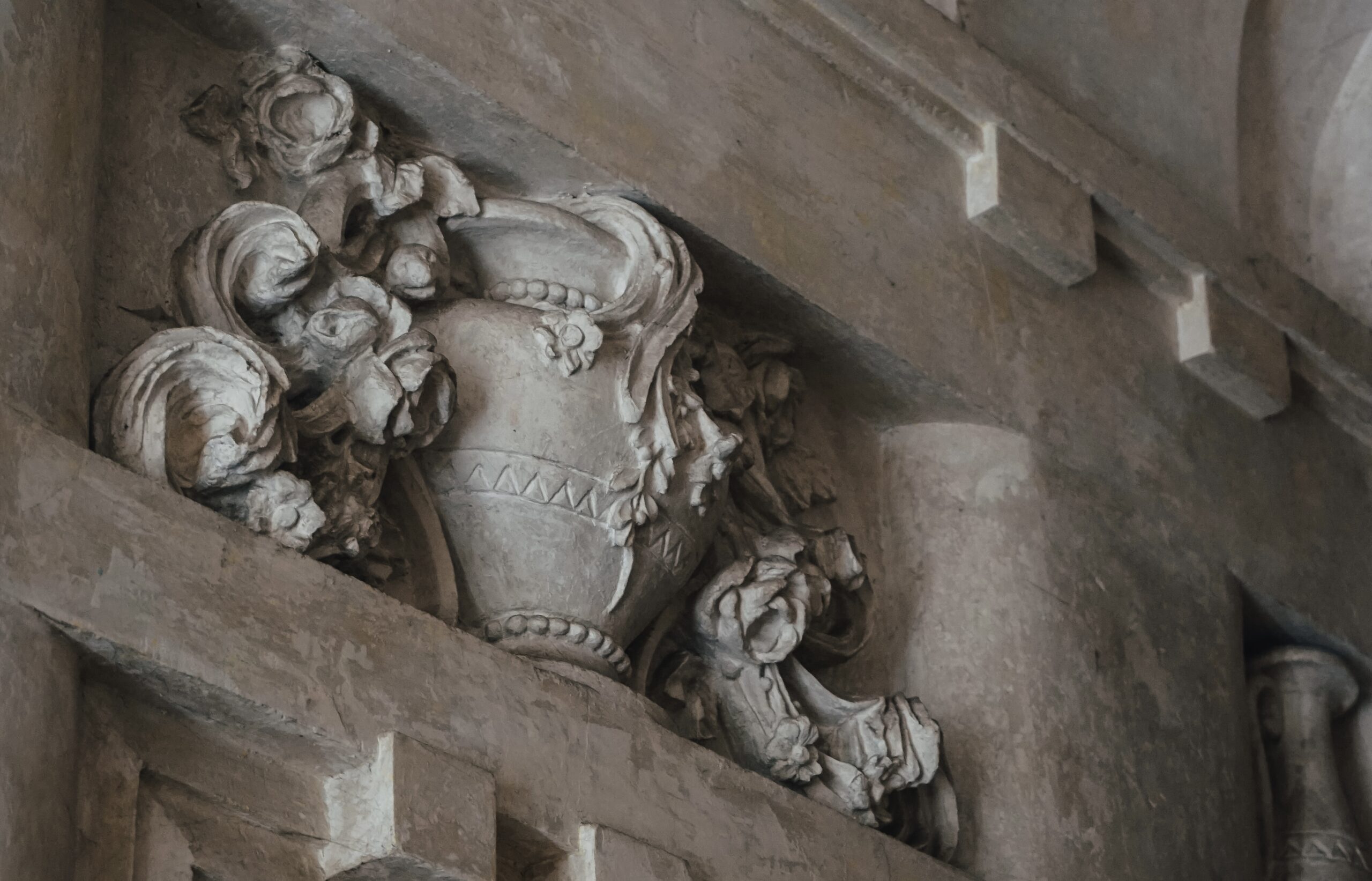
Although the façade retains the symmetrical composition inherited from historicism, it comes to life through its lavish Secession ornamentation. The most richly decorated elements are the main entrance portal and the side sections of the façade, crowned with small attic gables. Here, visitors can admire stylized leaves and flowers, decorative stucco panels beneath the windows, and plant-inspired capitals on the pilasters. One of the building’s most distinctive features is the wrought-iron balcony railings on the second floor, designed in the form of dandelions—one of the most elegant decorative motifs of the entire façade.
Interesting fact: When the building was constructed, Bohomoltsia Street was still known as Adam Asnyk Street. The area was planned as an upscale residential district, and nearly all of its buildings were erected simultaneously with the involvement of Lviv’s leading architects, resulting in the remarkable stylistic unity that defines the ensemble today.
And as for another famous treasure of this building—the unique stained-glass window known to almost every Lviv resident and countless visitors to the city—we’ll explore its story next time.