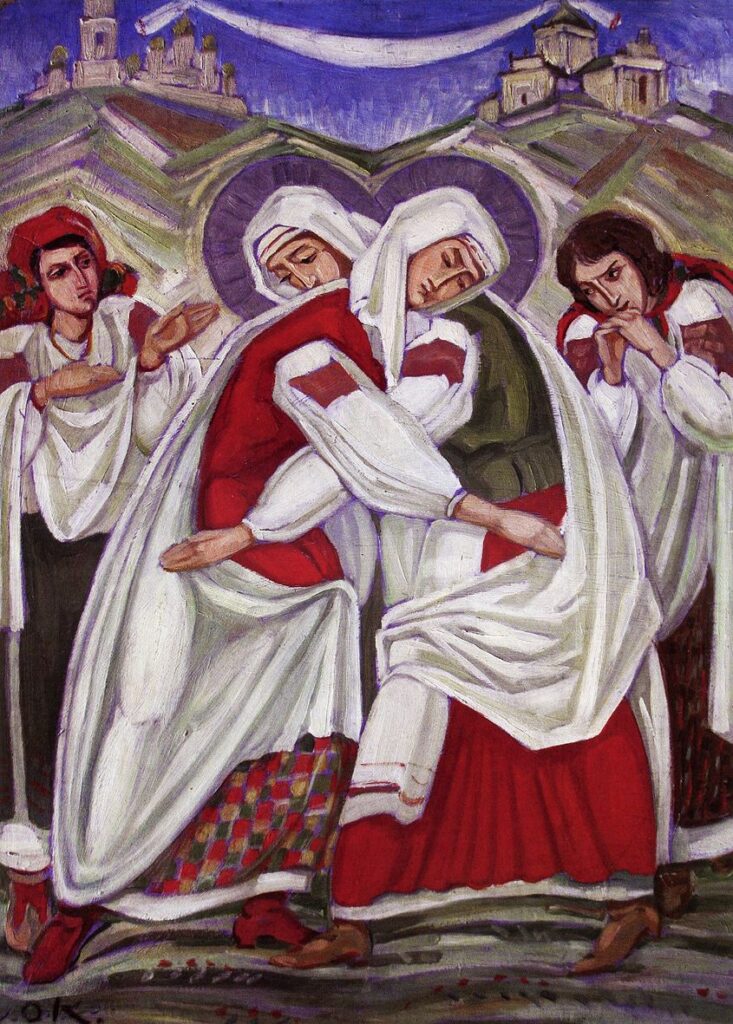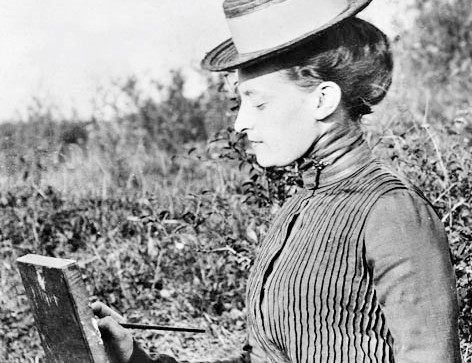
We have already written about Olena Kulchytska, but today we would like to explore her work through the lens of Art Nouveau and the changing role of women in the early twentieth century.
Although Kulchytska was not exclusively an Art Nouveau artist, her artistic language was shaped during the flourishing of the movement. While studying in Vienna, she encountered the ideas of the Vienna Secession, whose emphasis on decorative composition, flowing lines, stylised forms, and the unity of art and design influenced many of her early works.
Unlike many European Art Nouveau artists, who often portrayed women as idealised muses, mythical figures, or symbols of beauty, Kulchytska presented women as real individuals. Her subjects were mothers, craftswomen, intellectuals, and women in traditional Ukrainian dress. Their dignity, confidence, and connection to cultural heritage became central themes in her art.
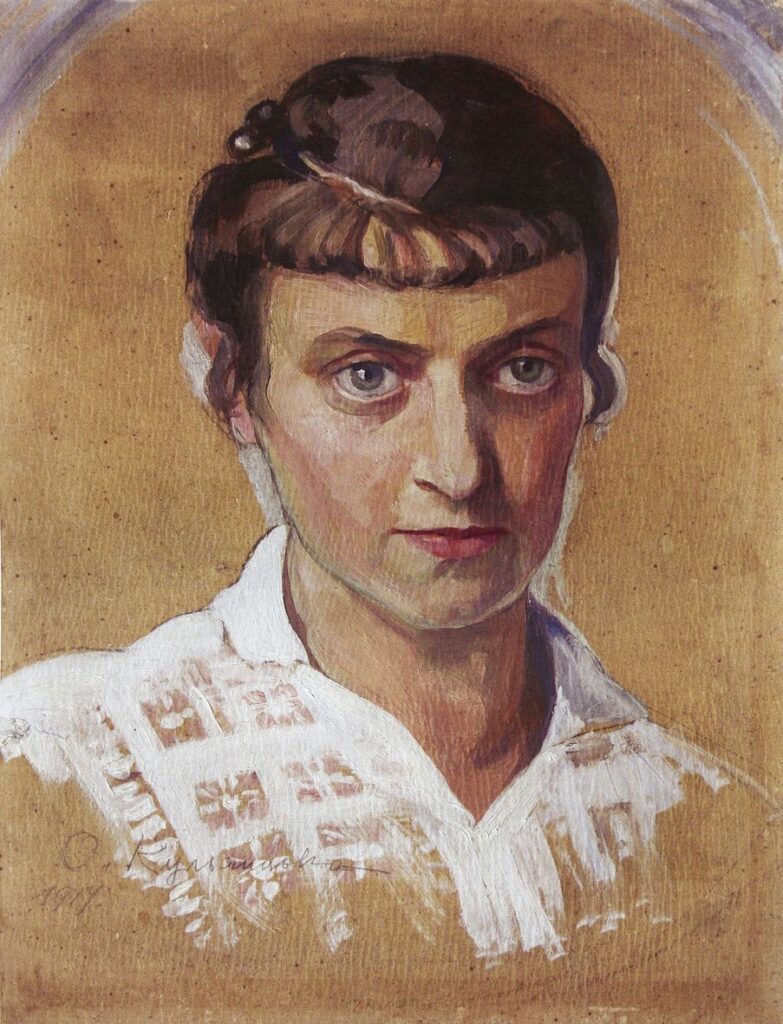
Her early prints, illustrations, and decorative compositions reveal clear echoes of Art Nouveau through their elegant silhouettes, flattened perspective, rhythmic ornamentation, and carefully balanced compositions. At the same time, she transformed these international influences by combining them with Ukrainian folk traditions, embroidery patterns, and regional costumes.
Kulchytska herself embodied the image of the modern woman of the Secession era. At a time when professional artistic careers were still dominated by men, she built an outstanding career as a painter, graphic artist, illustrator, educator, and researcher of folk art. Through both her life and her work, she demonstrated that women could be creators, innovators, and guardians of cultural identity.
Today, Olena Kulchytska stands as one of the artists who gave the ideals of Art Nouveau a distinctly Ukrainian voice, replacing the decorative female symbol with the image of a strong, intelligent, and culturally conscious woman.