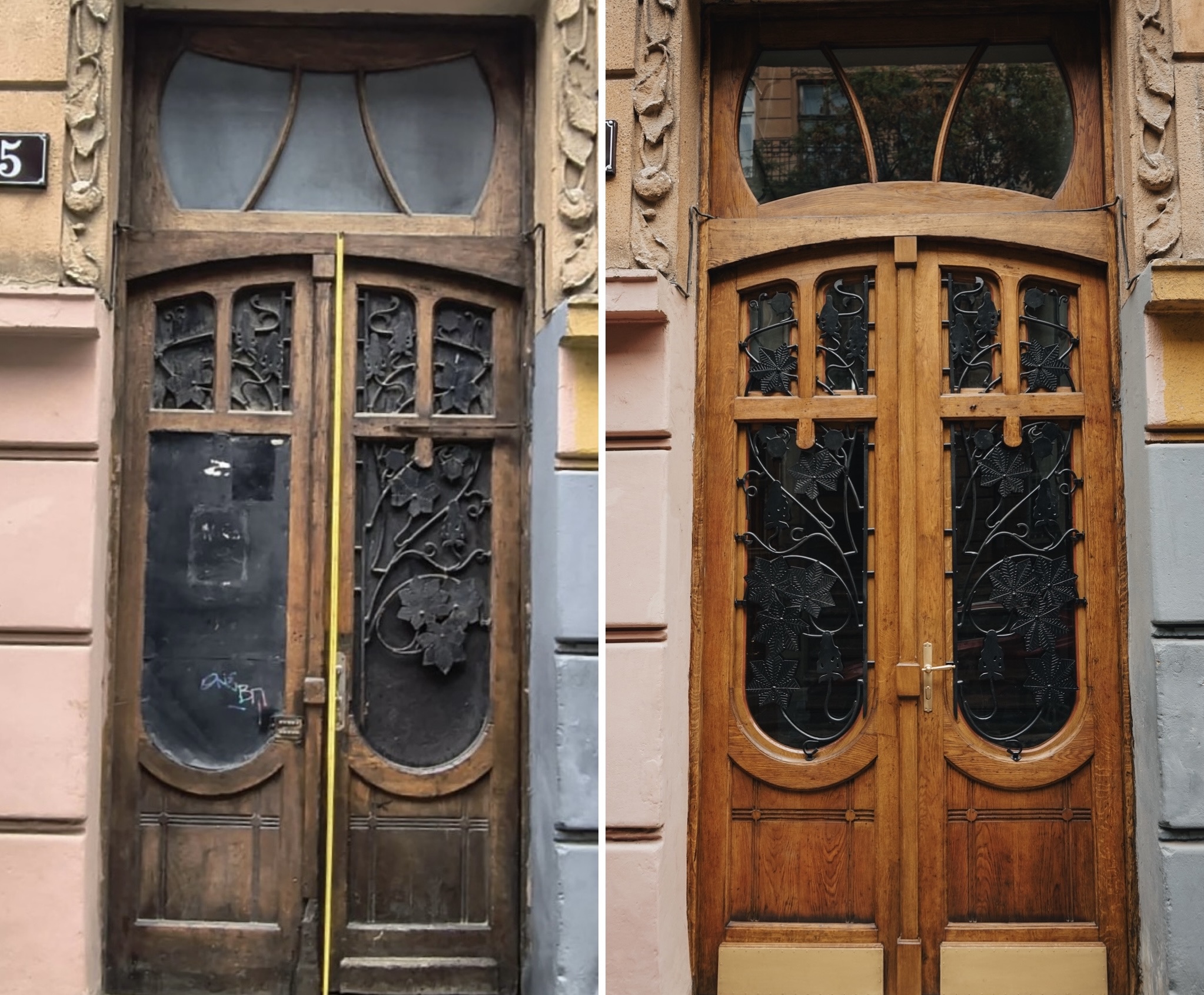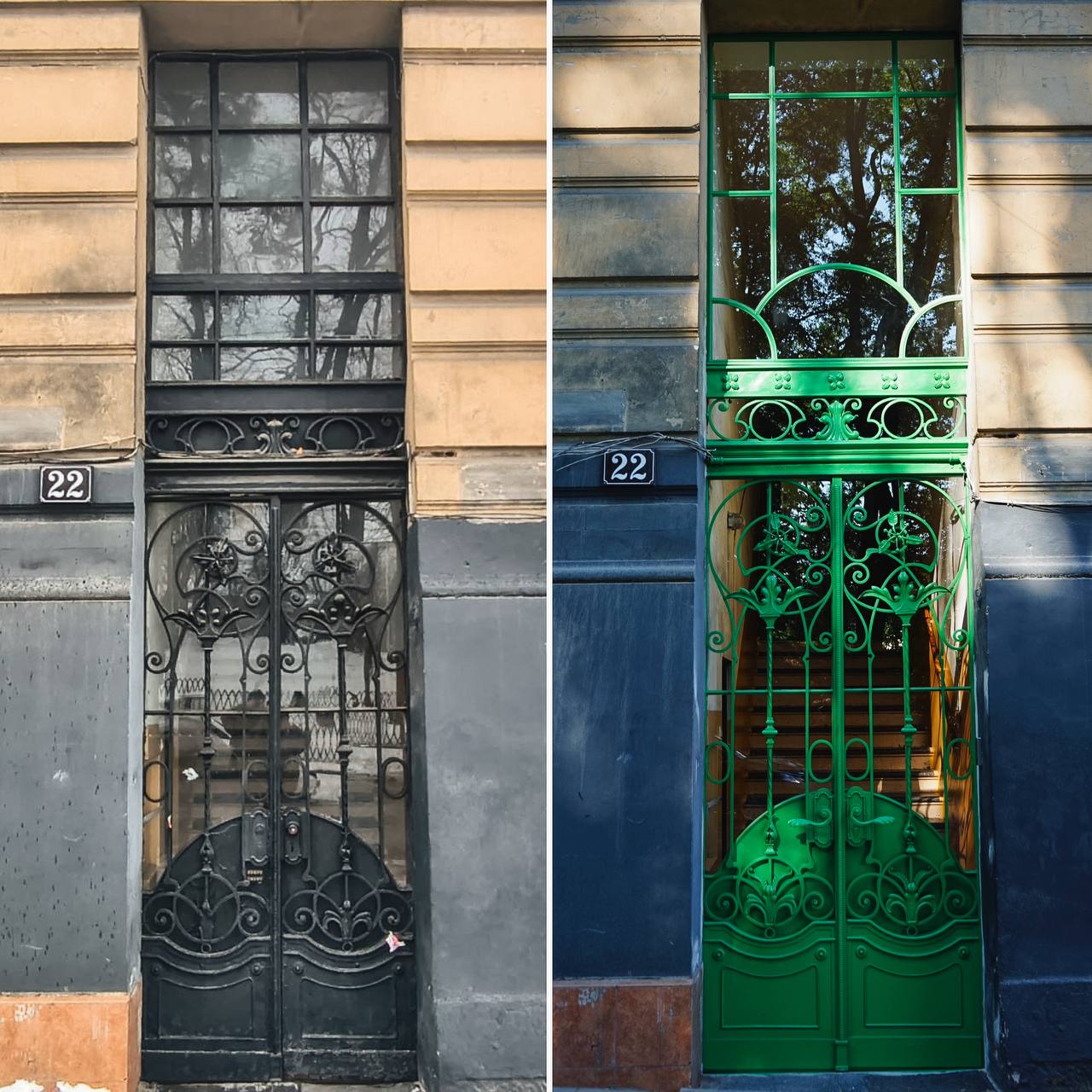
The restoration of the metal Art Nouveau gate at 22 Stryiska Street has been completed. The work was carried out by restorer Yurii Mykolaishyn.
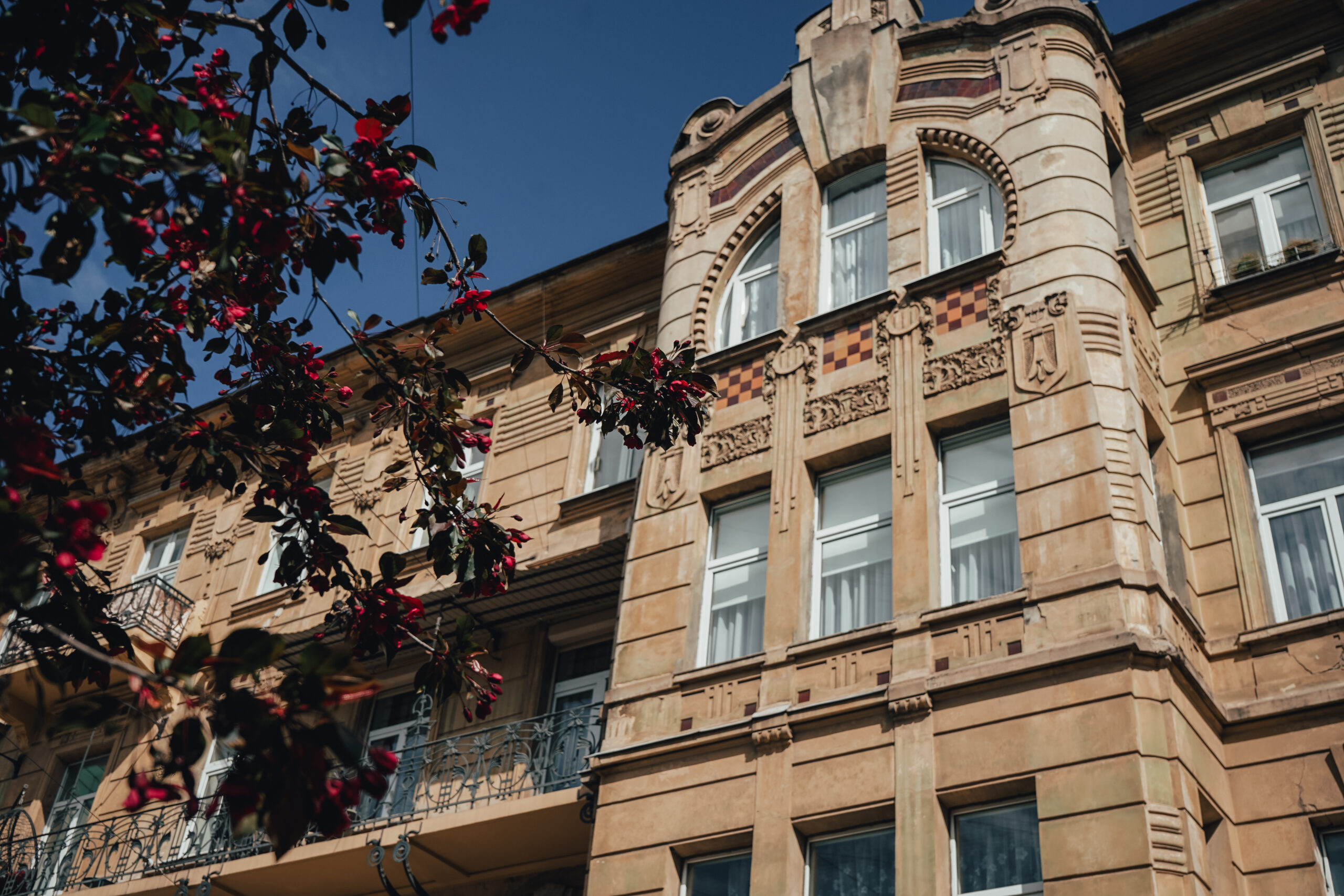
The buildings at 22, 24 and 26 Stryiska Street form one of the best-preserved ensembles of early 20th-century Art Nouveau architecture in Lviv. They were built in 1906 to a design by architect Napoleon Luzhkevych, with construction carried out by the building company of Ivan Levynskyi. Their façades are distinguished by rich Art Nouveau decoration, including mascarons, floral ornaments and elaborate stucco work.
The buildings also have an interesting history connected with their former residents. No. 22 was home to sculptor Petro Harasymovych and Professor Kazimierz Kwiatkowski. No. 26 was inhabited by the prominent pharmacologist Leon Popielski and also housed the “House of Ruthenian Student Youth named after Aital Yulianovych Yasenytskyi”, a residence for students from Russophile families. Between 1911 and 1939, one of these buildings was also home to the internationally renowned anthropologist Jan Czekanowski, known in particular for his scientific expeditions to Africa.
The restoration of the gate at 22 Stryiska Street required the reconstruction of a number of lost elements. One of the most significant losses was the original transom, measuring 210 × 140 cm. The original interior and exterior handles had also been lost, as had several decorative wrought-iron elements on the door leaves and the central transom.
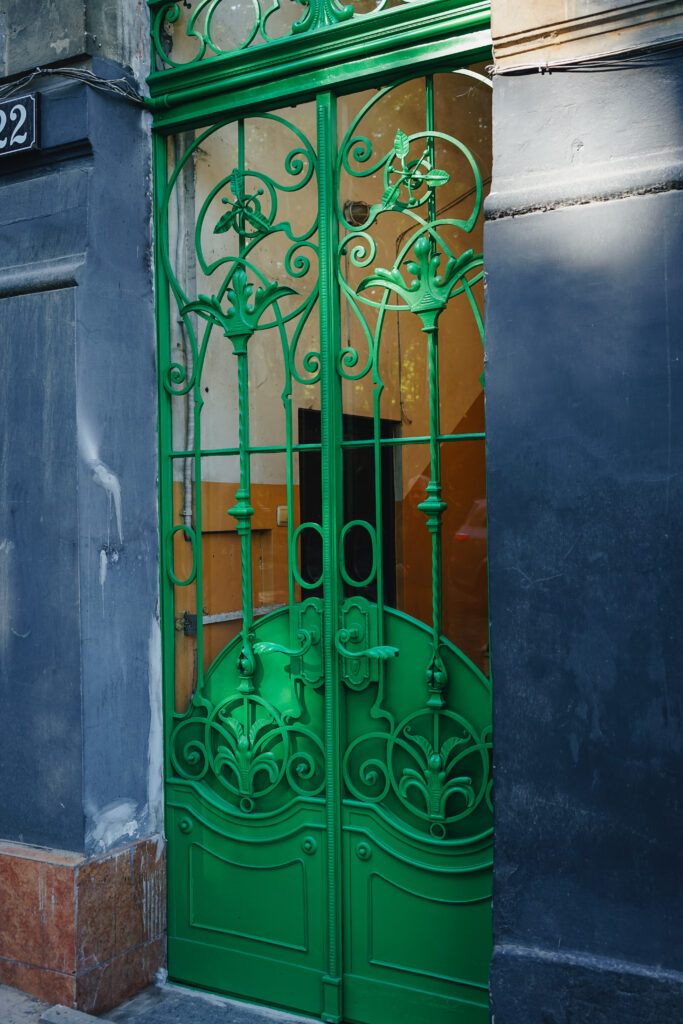
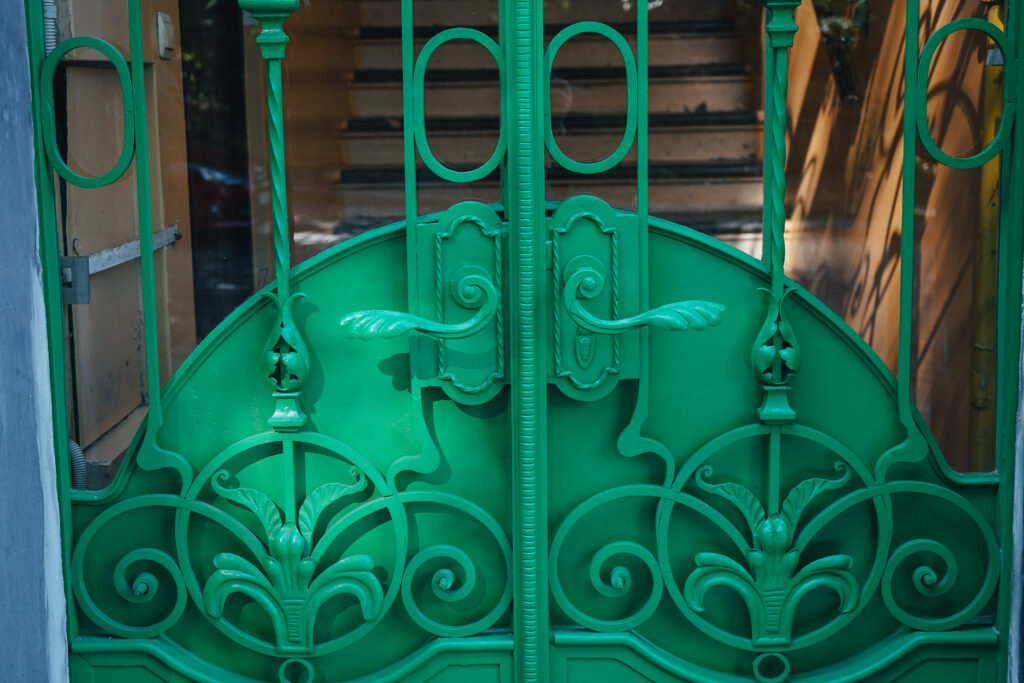
During restoration research, the team discovered the gate’s original green colour beneath numerous later layers of paint. This historic shade was recreated as part of the restoration.
Similar metal Art Nouveau gates preserved in other parts of Lviv, including on Sevastopolska and Verkhratskoho streets, helped the restorers reconstruct some of the missing details. The similarity of their design suggests that such gates may have been produced in series, most likely at Ivan Levynskyi’s factory. Preserved examples served as references for recreating the interior and exterior handles.
As no documentation of the original appearance of the transom survived, its design was developed on the basis of comparable Art Nouveau gates in Lviv, taking into account the stylistic features of the early 20th century, the proportions of the gate itself and modern safety requirements. The glazing frames were also restored so that the glass can be removed for cleaning and maintenance without damaging the historic structure.
The missing wrought-iron decorative elements on the door leaves and central transom were also recreated using historical analogues, restoring the integrity of the gate’s original artistic composition.
Particular attention was required for the lower section of the structure. Over the decades, repeated repairs to the pavement gradually raised the level of the sidewalk, while the gate itself remained at its original height. As a result, rainwater and meltwater repeatedly reached the lower part of the structure, causing significant corrosion to the frame and door leaves. The damaged areas were restored and protected during the works.
Today, the Art Nouveau gate at 22 Stryiska Street once again appears in its restored historic form — with its original green colour, reconstructed wrought-iron details, handles and transom.
Another important element of Lviv’s Art Nouveau heritage has returned to the cityscape.
The total restoration cost was UAH 139,770.
Residents’ contribution — UAH 41,931.
Funding from the “Art Nouveau as a New EUtopia” programme — UAH 97,839.