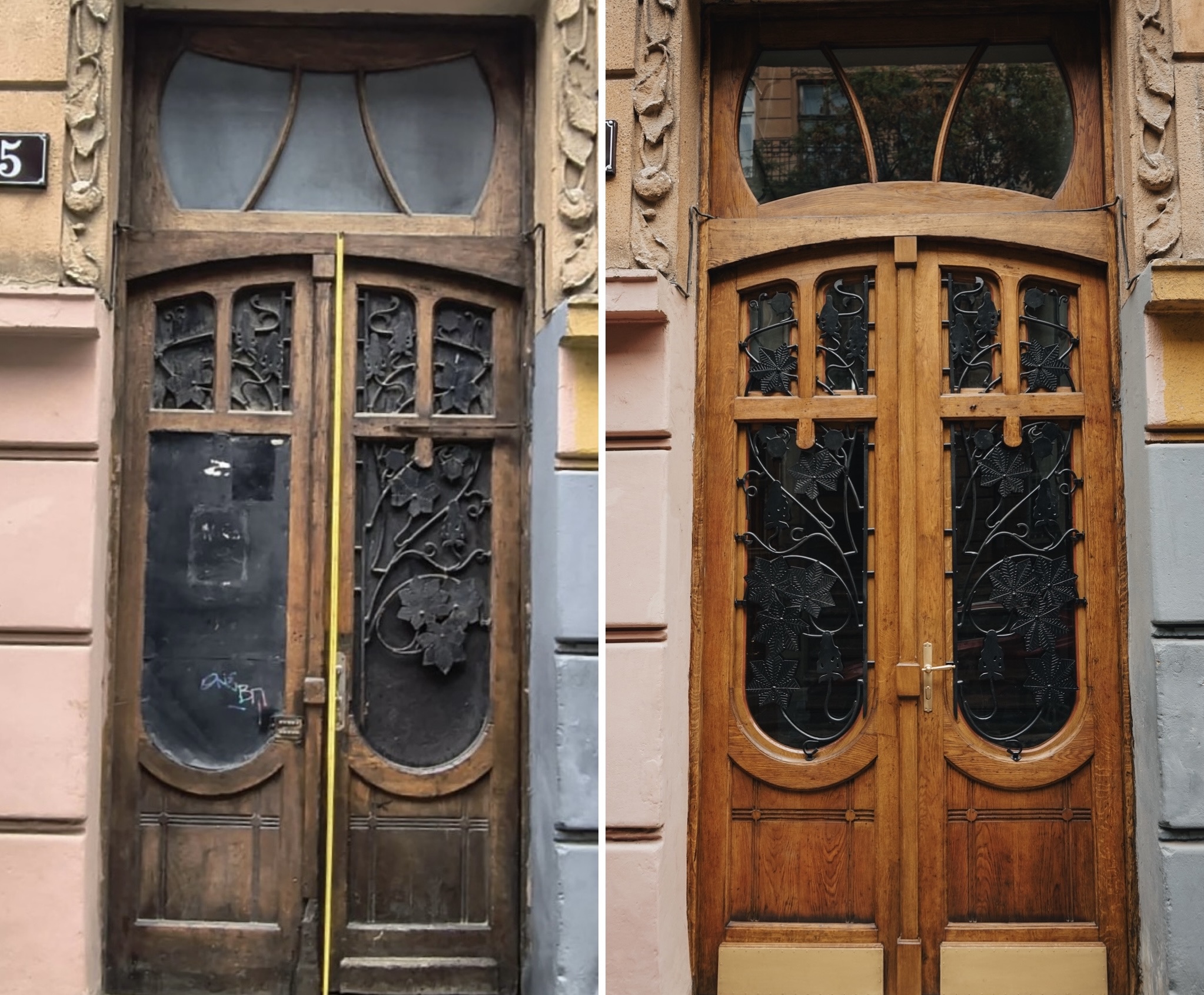
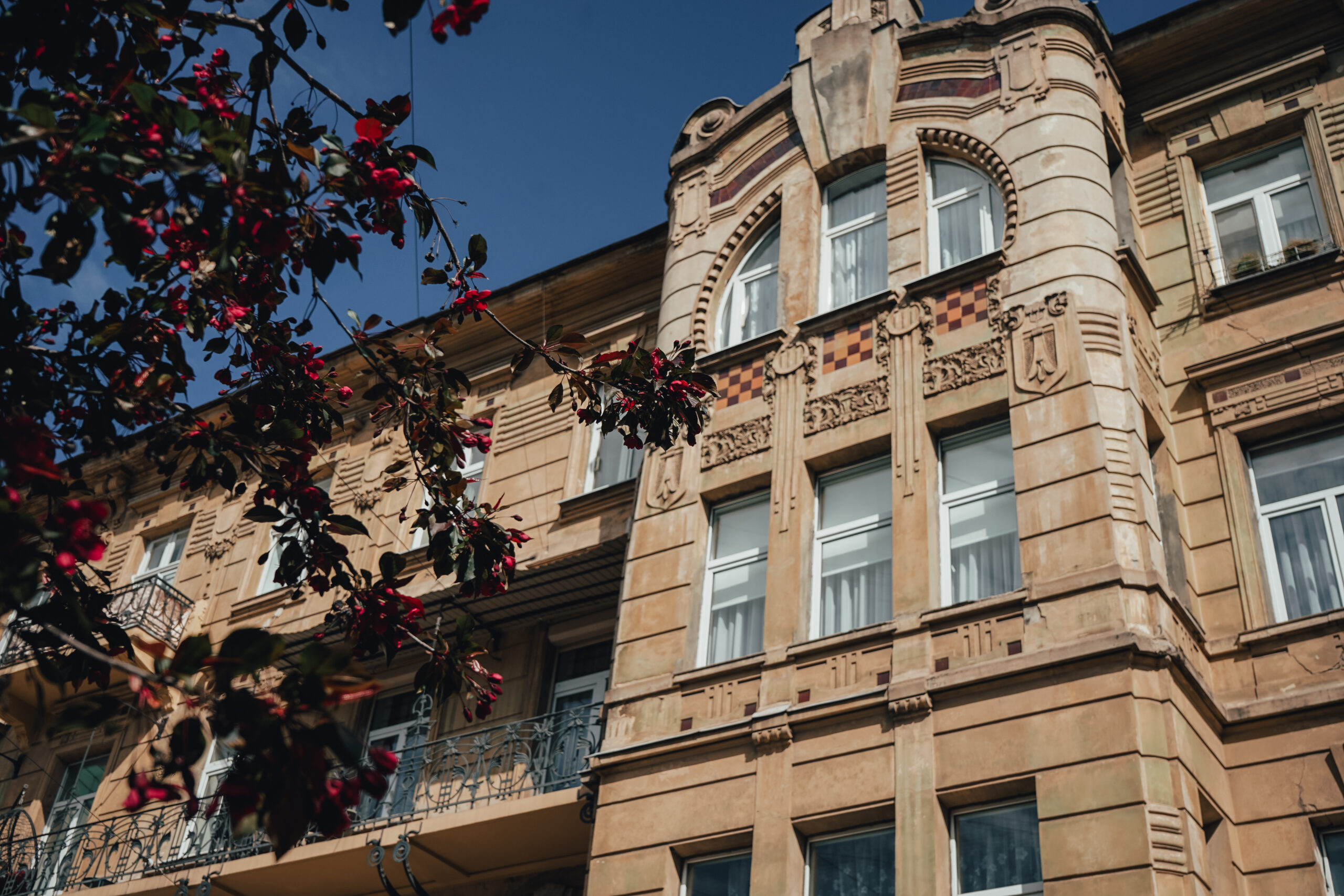
The building at 71 Franka Street in Lviv is one of the most expressive examples of early 20th-century Secession (Art Nouveau) architecture in the city. Its façade seems to “move”: flowing lines, plastic forms, and sculptural elements create the effect of a living surface. Here one can spot fantastic creatures, decorative mascarons, and stylized floral motifs.

The symbolism is particularly intriguing. The façade features motifs of rebirth and strength — images that resonate with the spirit of a new era. Secession sought to merge art with everyday life, which is why even an apartment building was meant to look like a work of art. This is precisely why the townhouse feels not merely like an architectural object, but like a carefully conceived artistic composition.
The history of the building also contains an unexpected layer. During renovation works in the basement, wall paintings were discovered depicting lions and tablets with commandments in Hebrew. Researchers suggest that a small private prayer room may once have existed there. This once again reminds us that early 20th-century Lviv was a multicultural city, where different traditions and stories could intertwine within the walls of a single building.