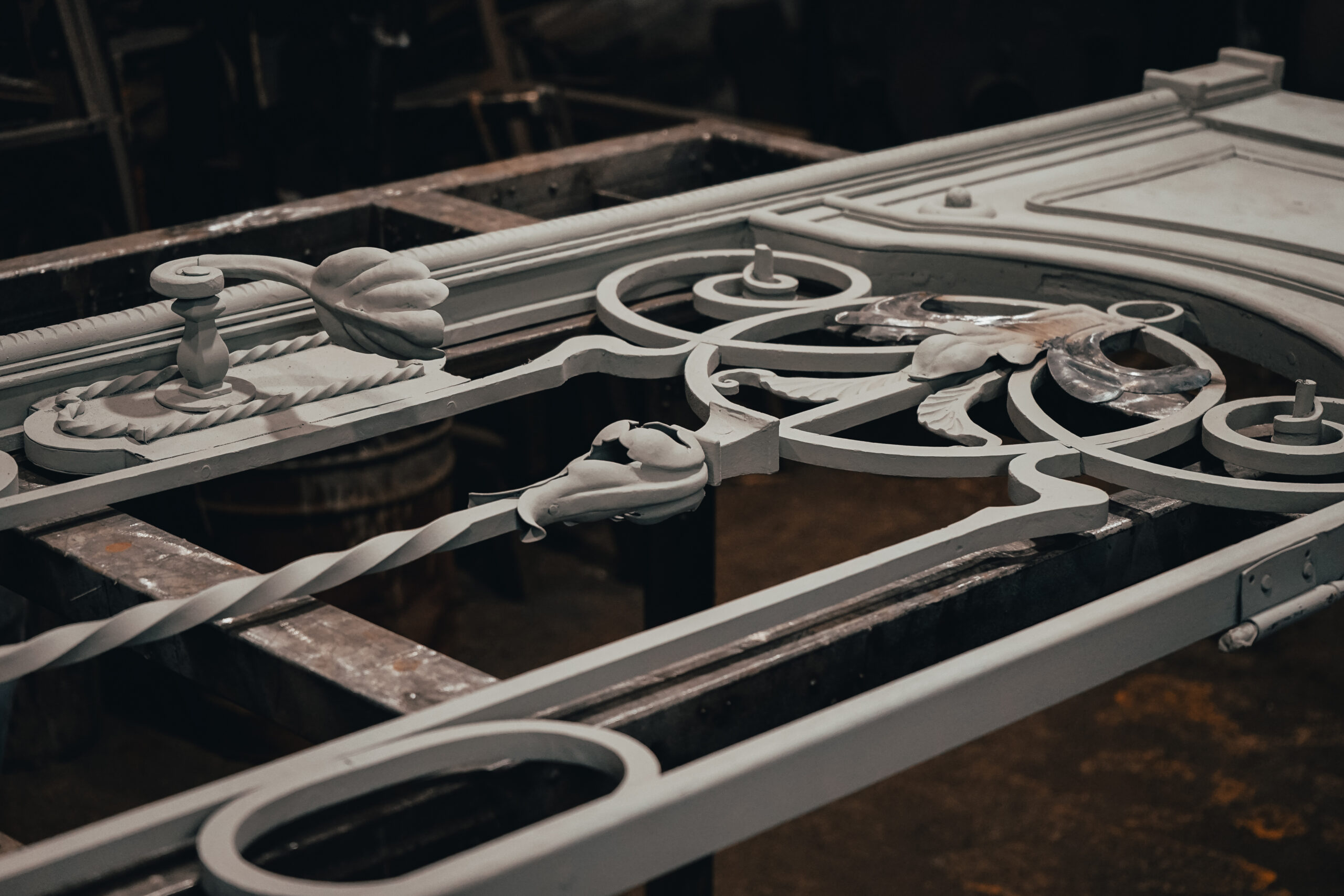
Today, we’d like to give you a glimpse behind the scenes of the restoration process and show you the work currently underway to bring the Art Nouveau gate at 22 Stryiska Street back to life.
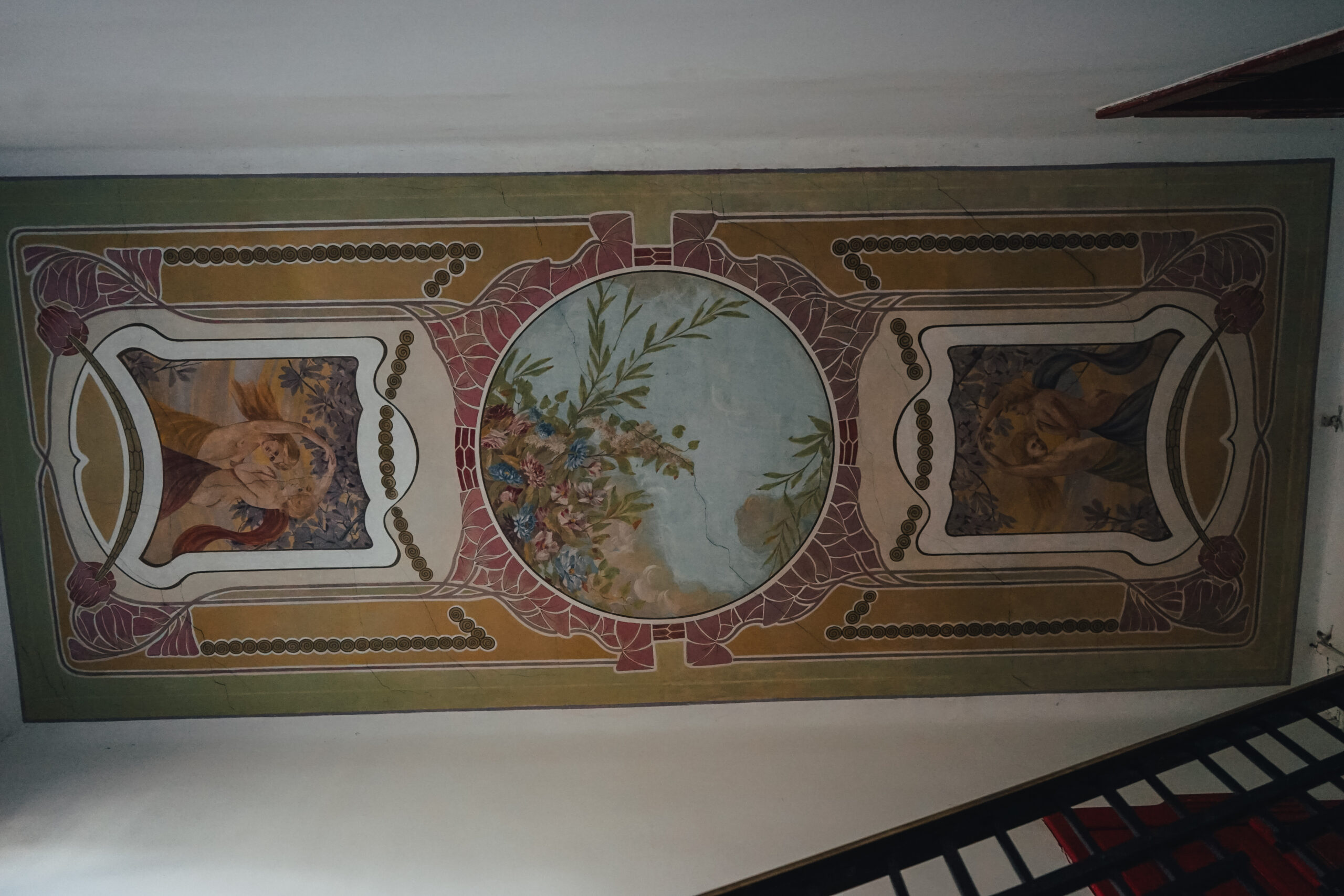
Buildings 22, 24, and 26 Stryiska Street form one of the best-preserved Art Nouveau ensembles in Lviv. They were built in 1906 to the design of architect Napoleon Łuszczkiewicz, while the construction was carried out by the Ivan Levynskyi Company. Their façades are richly decorated in the Art Nouveau style, featuring mascarons, floral ornaments, and elaborate stucco details.
These buildings also have a remarkable history of distinguished residents. Building No. 22 was home to sculptor Petro Harasymovych and Professor Kazimierz Kwietniewski. Building No. 26 was home to renowned pharmacologist Leon Popielski, and also housed the Aytal Yasenytskyi House of Ruthenian Students, a dormitory established for students from Russophile families. Between 1911 and 1939, one of these buildings was home to world-renowned anthropologist Jan Czekanowski, whose scientific expeditions to Africa brought him international recognition.
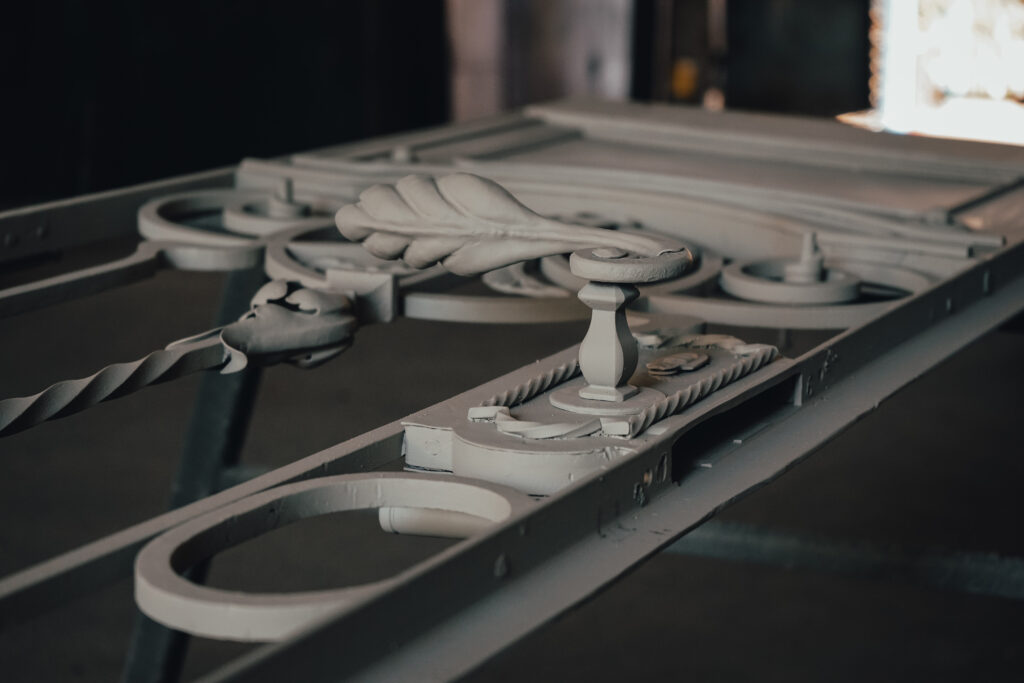
Today, restoration is underway on the building’s original Art Nouveau metal entrance gate under the direction of conservator-restorer Yurii Mykolaishyn.
During the examination of the structure, restorers discovered that one of its greatest losses was the original transom window measuring 210 × 140 cm, which had disappeared completely. The same element has also been lost from the neighbouring building at No. 24. In addition, the original interior and exterior door handles no longer survived, while several decorative wrought-iron elements on the door leaves and the central transom had also been lost over time.
The restoration research also revealed an exciting discovery. Beneath numerous later layers of paint, specialists uncovered the gate’s original green colour, which will be reinstated as part of the restoration.
Similar Art Nouveau metal gates can still be found elsewhere in Lviv, indicating that they were most likely produced by the Ivan Levynskyi Factory. Close examples survive on Sevastopolska Street and Verkhratskoho Street, where the original handles served as references for recreating the missing hardware on the gate at No. 22.
The original appearance of the transom, however, has not survived. As a result, its new design had to be developed using comparable historic examples while taking into account the stylistic characteristics of early twentieth-century Art Nouveau, the unusually large dimensions of the opening, and modern safety requirements.
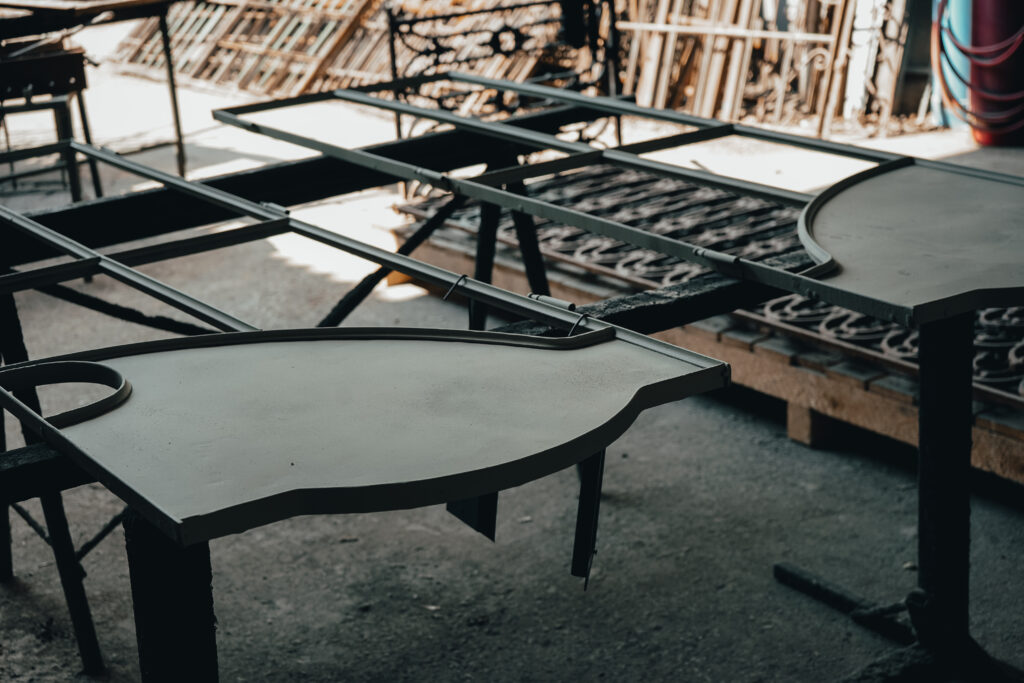
At the same time, new glazing frames are being fabricated in a way that allows the glass panels to be easily removed for cleaning and maintenance without affecting the historic structure.
Another important stage of the project is the recreation of the missing wrought-iron decorative details. Using historic references, craftsmen are reproducing the ornamental ironwork on both the door leaves and the central transom, restoring the gate’s original artistic composition.
One of the greatest technical challenges has been the severe deterioration of the lower section of the gate. Over many decades, repeated pavement repairs gradually raised the sidewalk level while the gate remained at its original height. As a result, rainwater and melting snow repeatedly accumulated around the base, causing extensive corrosion of both the frame and the door leaves.
Although several stages of the restoration are still ahead, the gate is already well on its way to regaining its historic appearance.
Stay tuned — soon we will show you the fully restored gate.