Lviv received a railway connection in 1861, at the same time the first railway station was built, which half a century later turned out to be crowded, because the passenger flow increased sharply (from 200,000 per year to 1.5 million at the end of the 19th century). At the same time, the idea arose to build a new palace in Lviv, which this year celebrates its 120th anniversary since its official opening.
The idea of building a new palace was actively promoted by the director of the Lviv railway at the time, Ludwik Vezhbytskyi. Well-versed in the specifics of the station’s operation, the engineer Vezhbytsky worked out the requirements for the project of the new station, which included not only the palace building, but also the landing stage and auxiliary buildings.


In the words of Vezhbytskyi: “Railway yard covers an area of 270 hectares and 150 km of railway tracks, is one of the largest non-dead-end stations in Austria, through which 160, and soon 200 trains pass a day” Director Vezhbytskyi advocated the maximum involvement of local specialists in the design and construction of the station and the courtier himself led a group of structural engineers designing the landing stage. There were also disputes regarding the authorship of the building of the palace, which spilled into the columns of newspapers. Vezhbytsky entrusted the design of the architectural image of the building to the architect Vladyslav Sadlovsky, but after the completion of construction, he did not recognize the sole authorship of the latter. It was necessary to convene a prestigious commission of the Union of Artists chaired by the artist Zygmunts Rozwadovskyi, which officially confirmed the authorship of the architectural design of the facades by Vladyslav Sadlovskyi.

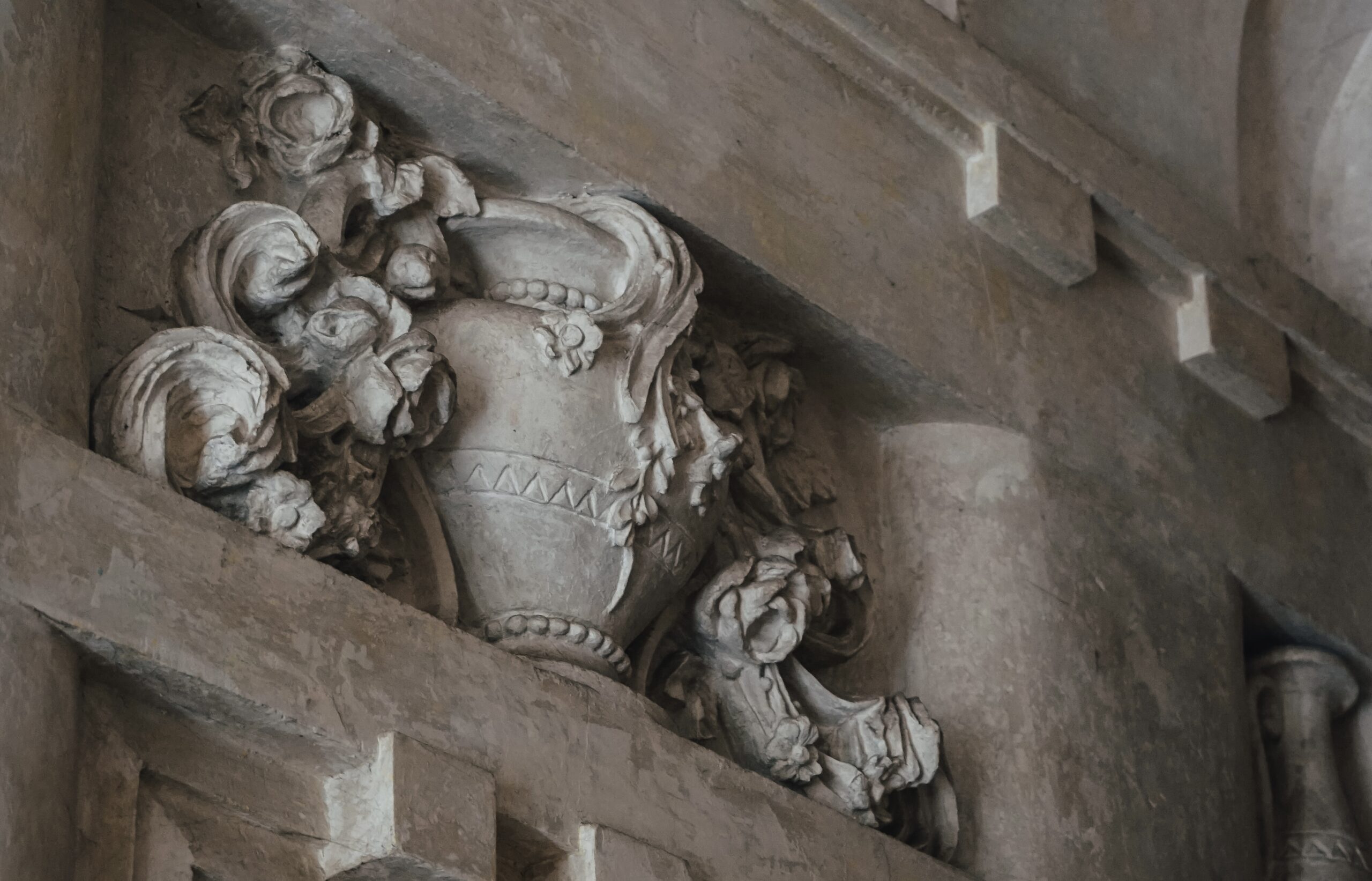
The allegorical figures “Trade” and “Industry” on both sides of the main entrance were made by Antoniy Popel, the sculptural composition under the dome above the main entrance was made by Petro Voytovych. It was Sadlovsky, in the second version of the project in 1900 (the first was in 1898), who gave the neo-Renaissance building a Secession sound.


The interiors of the waiting rooms were also made in the Art Nouveau style, one in the Zakopane style was designed by Tadeusz Obminski.

The construction in 1901-1904 was conducted by the enterprise of reinforced concrete works of Józef Sosnowski and Alfred Zaharievich and the factory of Ivan Levinsky. During construction, the latest achievements of the beginning of the 20th century were used: reinforced concrete and steel structures, electric lighting and ventilation, central heating, 70 clocks with a central control point.


The station building was damaged during the hostilities of 1915, 1918, 1939, 1941 and 1945. Full post-war recovery was completed only in 1957.

In 2003, for the 100th anniversary of the building, the station was restored.
In 2022, it received 130,000 people a day – that’s how many passengers the Lviv station received during the most difficult moments since the beginning of the full-scale invasion of Russia.
Materials: City History Center.