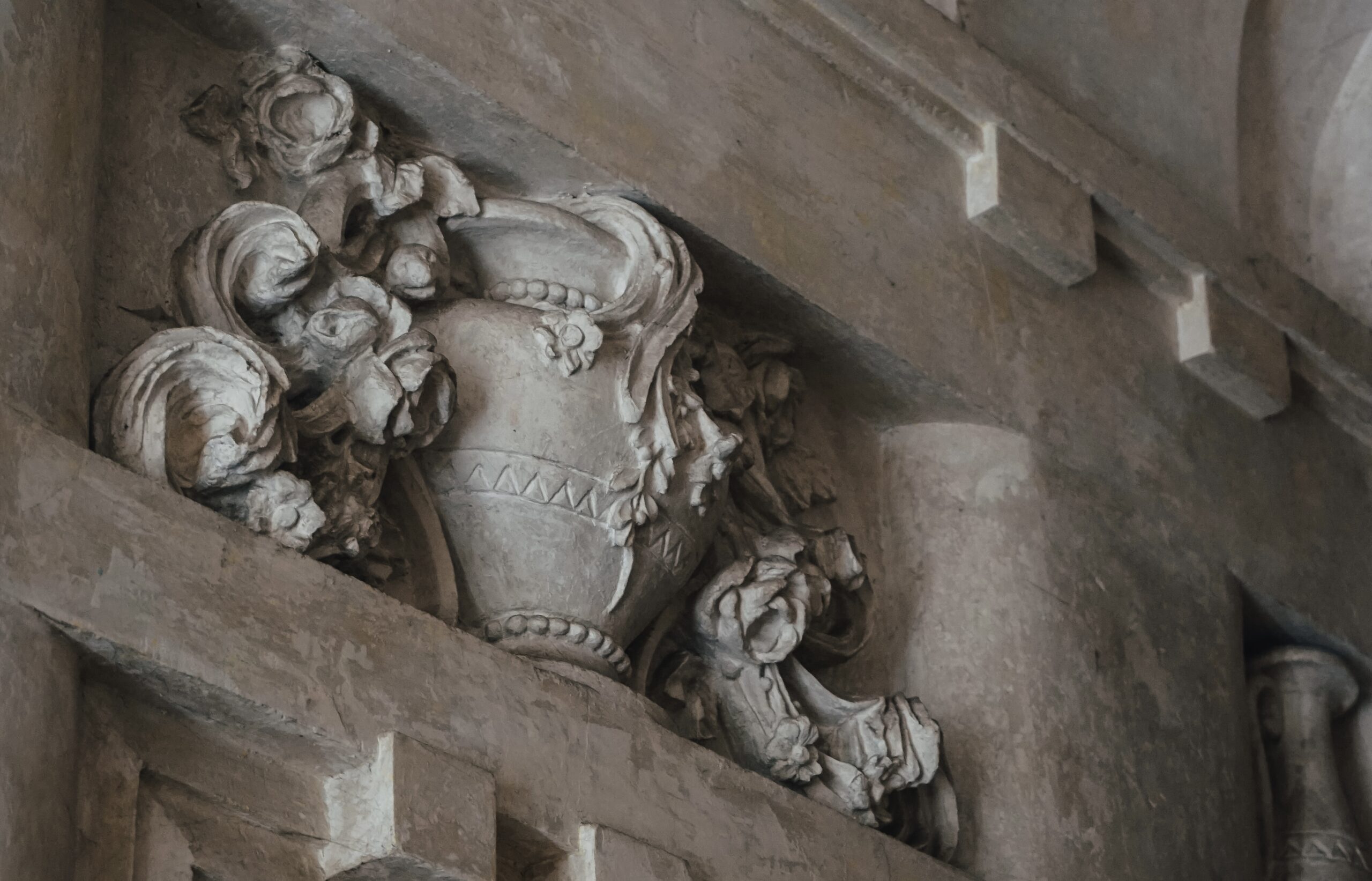
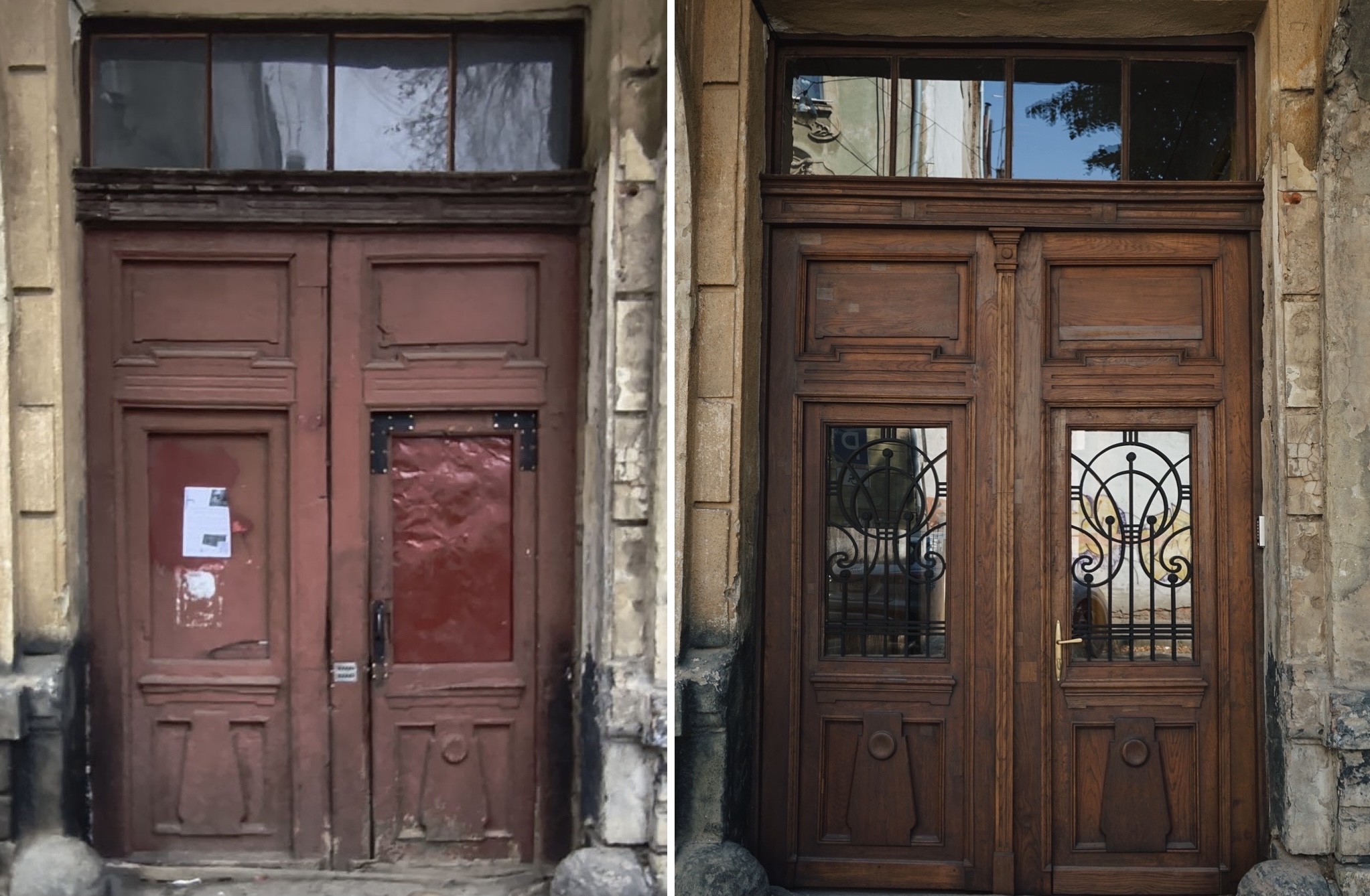
Spring is here — and flowers are blooming not only outside, but also in the entrances of Lviv’s townhouses. Building No. 13 on Serbska Street, constructed in 1911 by the firm of Adolf Piller, is an example of late Art Nouveau — more restrained than earlier versions of the style, yet still enriched with refined decorative motifs. These often “unfold” inside the building itself: in the entrance portal, along the stairwell, and in the delicate details of metalwork and stucco, where stylized floral forms and flowing lines echo the natural world.

It is a typical income house — a building designed for rental, with commercial spaces on the ground floor and apartments above, reflecting the urban lifestyle of early 20th-century Lviv. Yet beyond its architectural character, the house carries a deeper historical layer. On its corner, a stylized plaque with the Lviv coat of arms and the date 1633 refers to the right of emphyteusis — a long-term, hereditary right to use land. This detail does not mark the construction date of the building, but rather points to a much older legal tradition tied to the plot itself.

In this way, the building becomes more than just a product of its time. It connects centuries: a modern structure of the early 1900s that preserves a trace of the city’s legal and urban history from the 17th century. It is one of those quiet yet telling examples of how Lviv’s past continues to surface — not only in monuments or archives, but directly in the fabric of its everyday architecture.