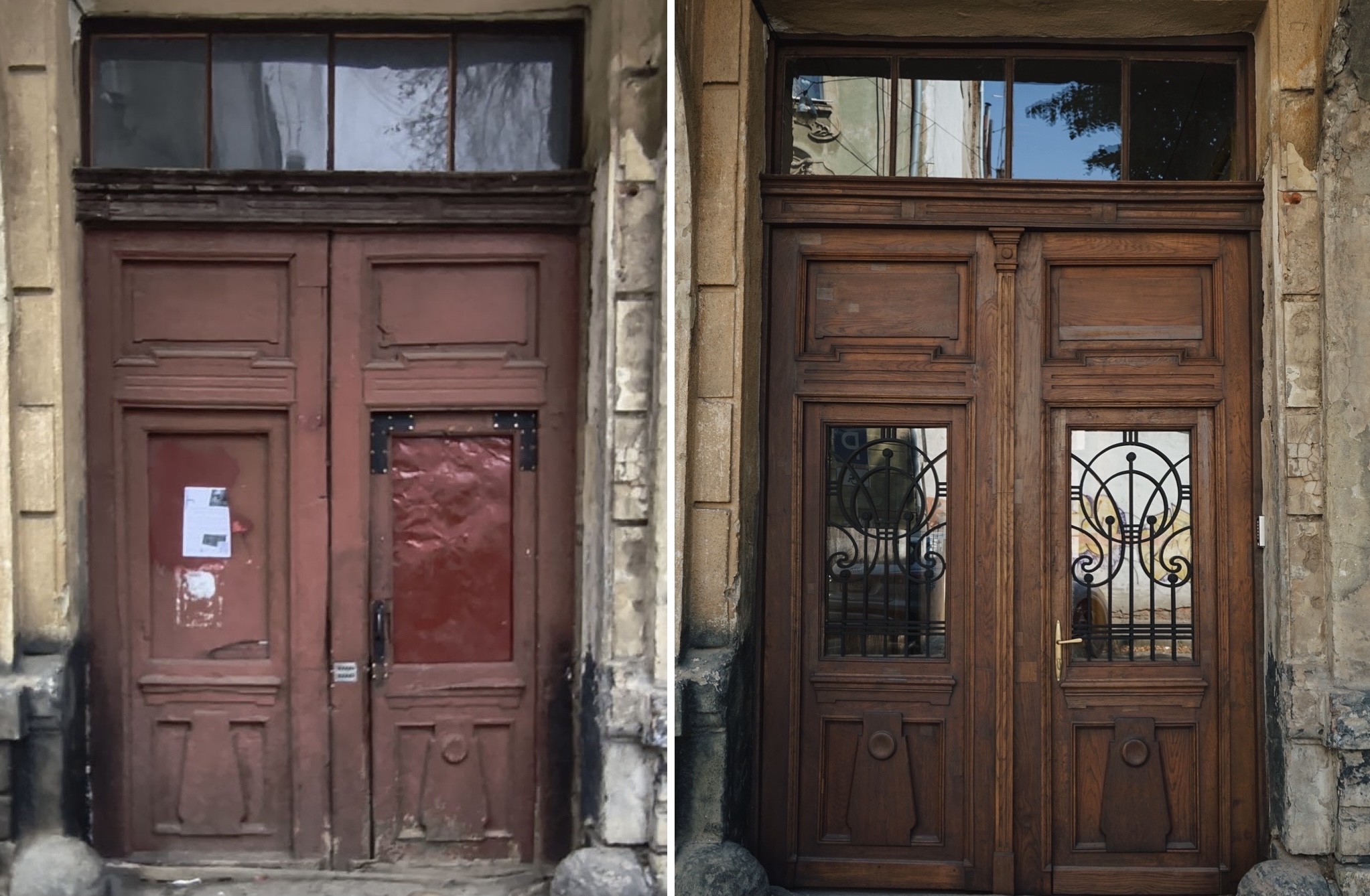
Each of the elements of creating an architectural image in the entrance area of tenement houses is important.
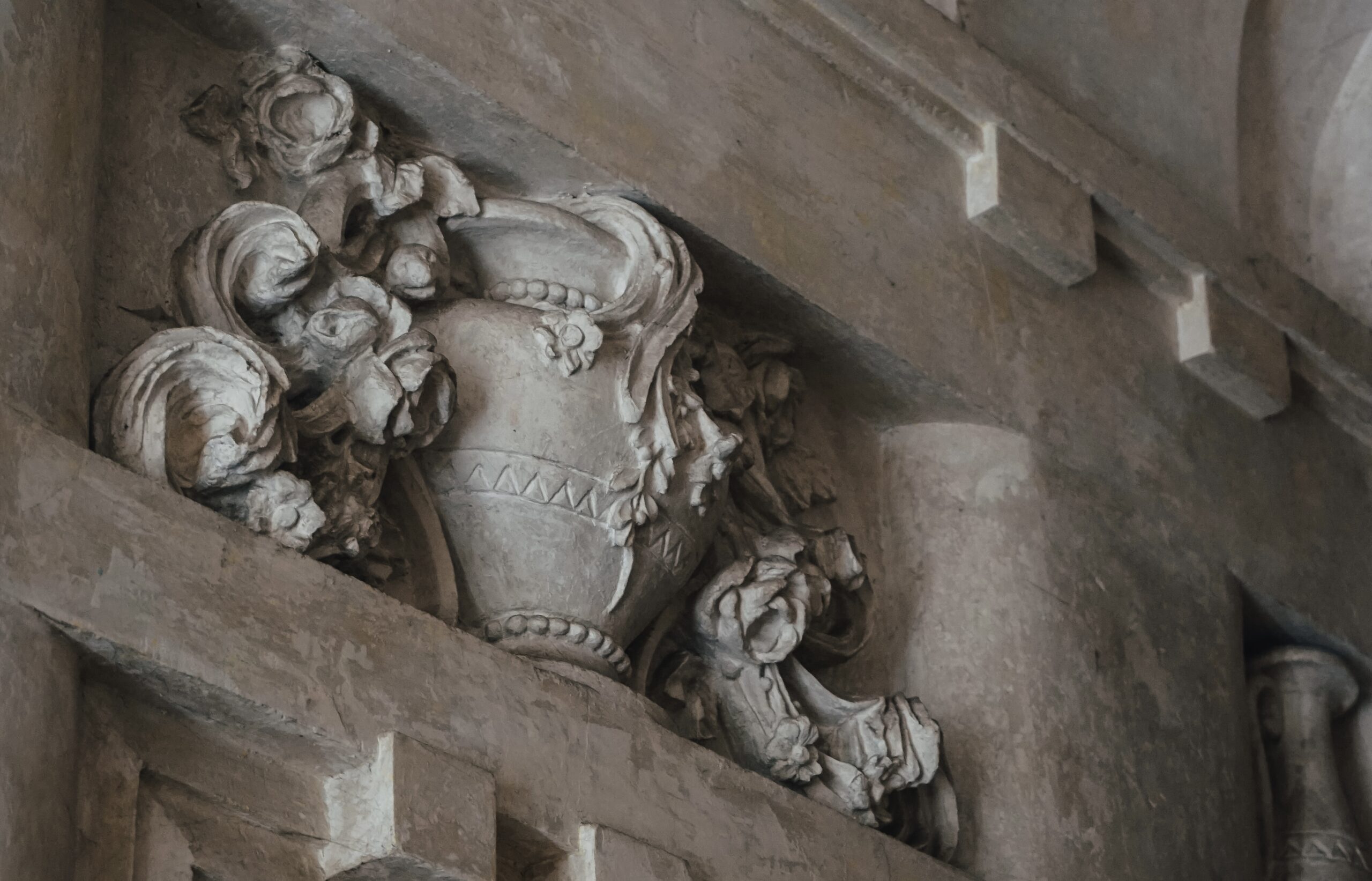
Before the beginning of the Art Nouveau era, stairwells were made mainly of wood, in most cases – of oak or pine, Art Nouveau stairs were increasingly made of stone – not only as a sign of the wealth of the owner of the house, but also for reasons of fire safety. To decorate stairwells, colored ceramic tiles or concrete-covered mosaics (the so-called “tiles”) for the floor, decorative plant stucco or decorative mascarons on the walls are used more and more often.


Often, on the stairwells, the elements of the carpet tracks were preserved. After all, the placement of carpets in lobbies and stairwells had a significant impact on the overall appearance of the premises and indicated the socio-economic level of the home owner.


Of the carpet fastening system, which includes a metal rod fixed on two sides with special fasteners, as a rule, only the fasteners that became fixed in the risers or treads are preserved.
Olga Lysenko recorded more than 20 types of fasteners in the vestibules and stairwells of Lviv residential buildings at the turn of the 19th and 20th centuries. In most stairwells and vestibules, there are only traces left, which indicate the presence of past luxury – these are recesses in the stone or wood of the steps (more often a landing), or metal particles of fasteners.

St. Chuprynky, 7; 2 – fastening to the stone stairs, beginning. 20th century, st. Kotliarevskoho, 25
The arrival of Soviet power and the loss of these houses’ basic idea of representativeness and desire for luxury led, first of all, to the disappearance of those elements that lost their functional significance. To this day, in the lobbies and stairwells of multi-apartment residential buildings, built at the turn of the 19th and 20th centuries, practically no elements have survived that made it possible to place a carpet on the stairs and prevent it from shifting during operation.
Sources:
Guide to the arrangement of the city Rules of conduct in the historical environment
Photo: Heritage Bureau in Lviv