Art Nouveau design in the interior abandons clear lines, giving preference to smooth outlines reminiscent of curved plant stems. These natural forms and curves can be seen in furniture, stairs, carpentry, furniture design, which is the main feature of the style and its main emphasis.
The color scheme of the design is mainly natural – white, cream, sand shades, which are often combined with floral motifs and wood tones. Art Nouveau involves a combination of various materials: wood, glass, stone, etc. This made it possible to create multi-layered, textured surfaces that gave the space depth and attracted the eye.


In the Secession, both symmetrical and asymmetrical compositions were used. Popular were plant ornaments (poppies, lilies, daisies, magnolias, asters), as well as romantic images of female figures against the background of landscapes. The upper ceiling was often decorated with motifs of the summer sky with clouds, birds and butterflies, which created a feeling of harmony with nature.
Lviv, being on the cultural border between Latin and Byzantine cultures, became a favorable environment for the development of secession. However, the “new style” contradicted the conservative attitudes of local residents, as it moved away from classicism towards the avant-garde. Therefore, the Lviv Secession was more restrained and modest compared to the Vienna Secession, it was often combined with folk styles. For example, it can be seen in the tenement of Josef Hornung at 66 Franka Street and in the houses near the school for the blind on the same street.
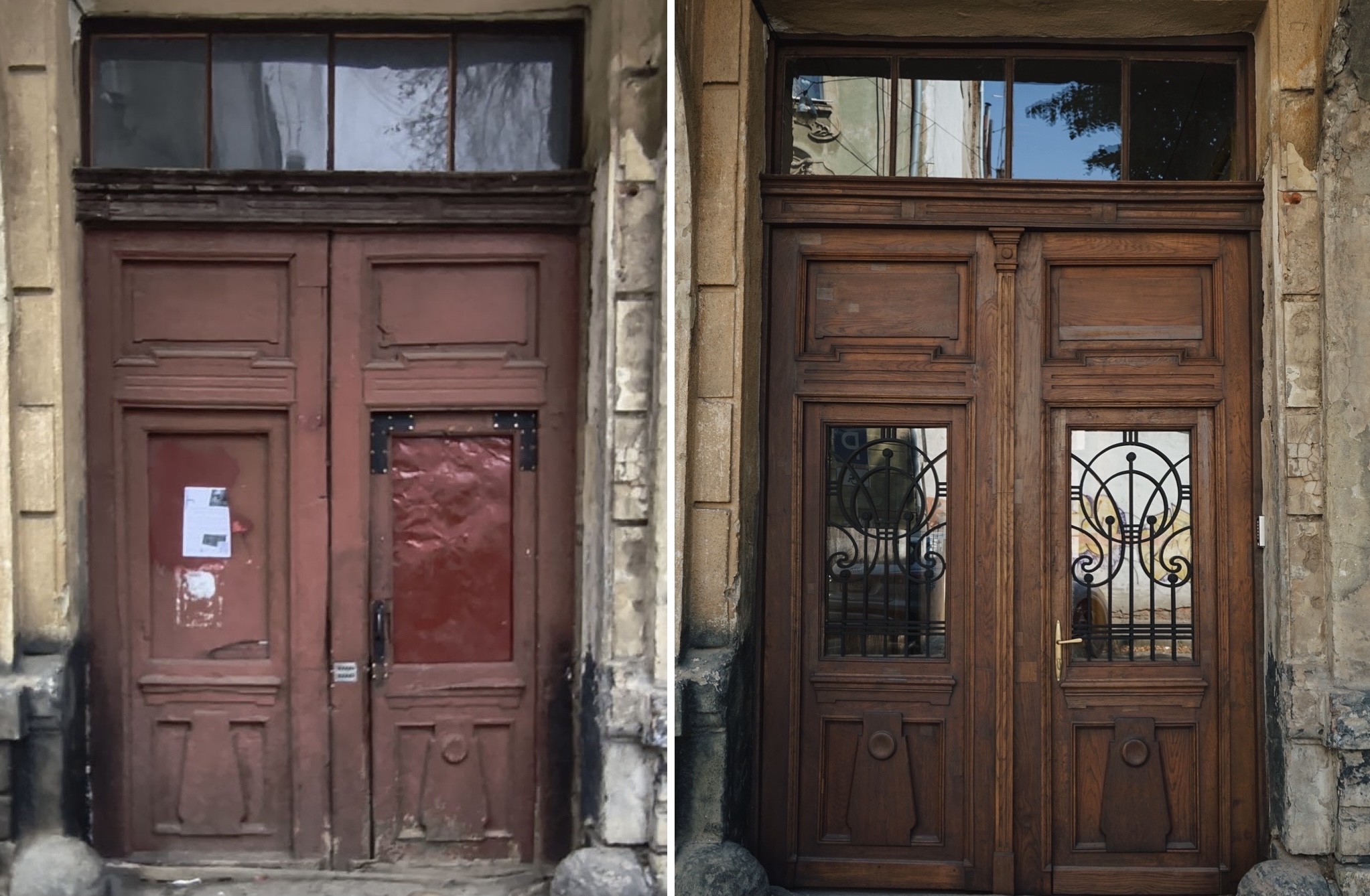
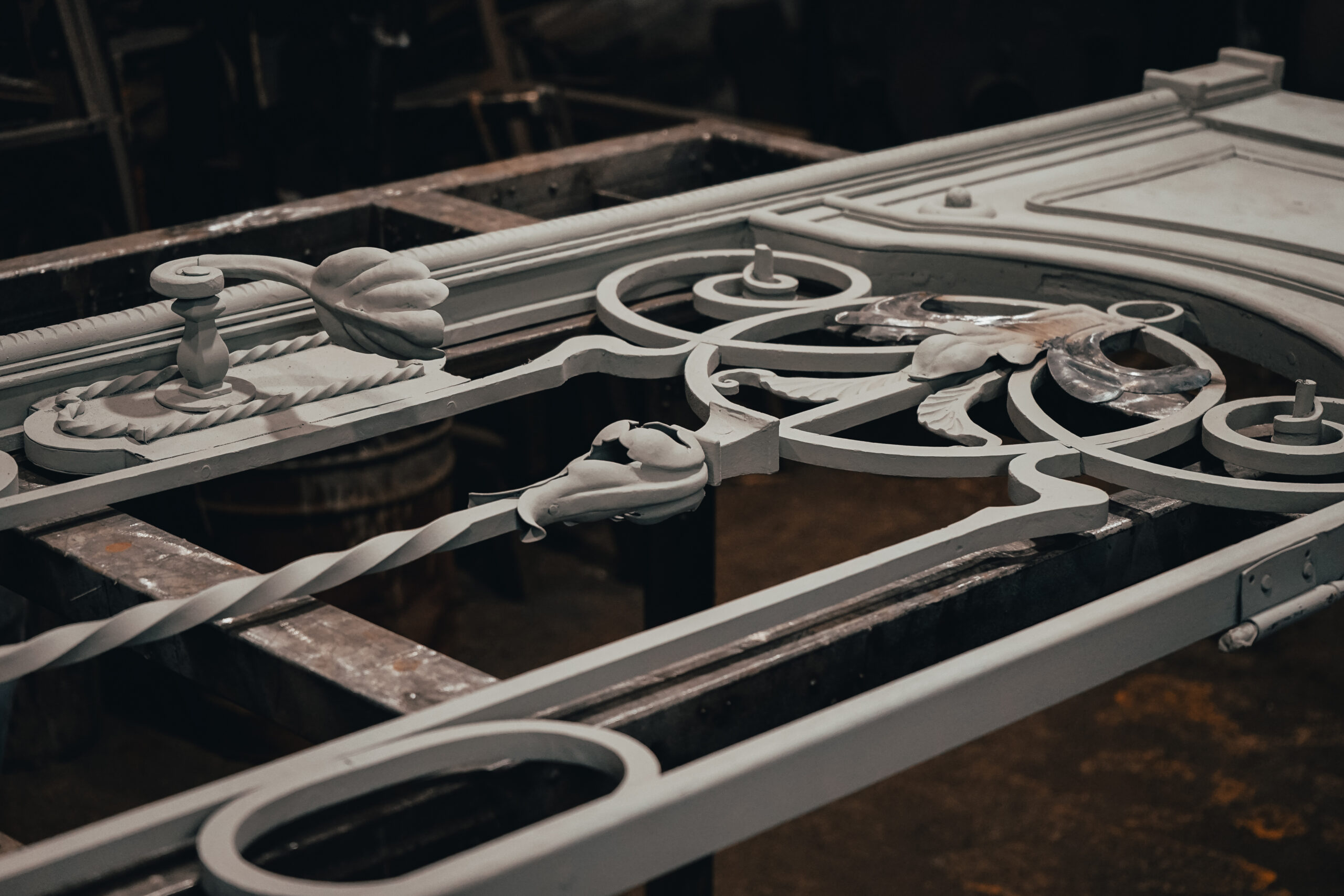
Colored floor tiles, stained-glass windows, tinted and painted glass, bronze and brass details (mailboxes, doorknobs, chandeliers), ceiling paintings of the lobby and stairwells were widely used in the interior. The newest thing is to cover the lobby walls with colored ceramic tiles. The premises were decorated with tapestries, wallpapers, paintings, as can be seen in the historical photos of the interiors of Segal’s house on the street. M. Skoryka, 6.


One of the colors of the early Art Nouveau interior was a tiled stove, mostly in one tone, which allowed to create an ensemble with other decor elements. All polychrome works were executed by hand, which corresponded to the principle of uniqueness of each work.
Lviv-based researcher and architectural historian Tetiana Kazantseva claims that in the Ukrainian Secession they imitated the polychrome model of the Ukrainian house with a light facade and colored majolica inserts, as well as a high dark shingle roof. Paintings, etched glass windows and doors were widely used in the interior, and the color accent was a stove with tiles painted in folk style (the house of the “Dniester” society).


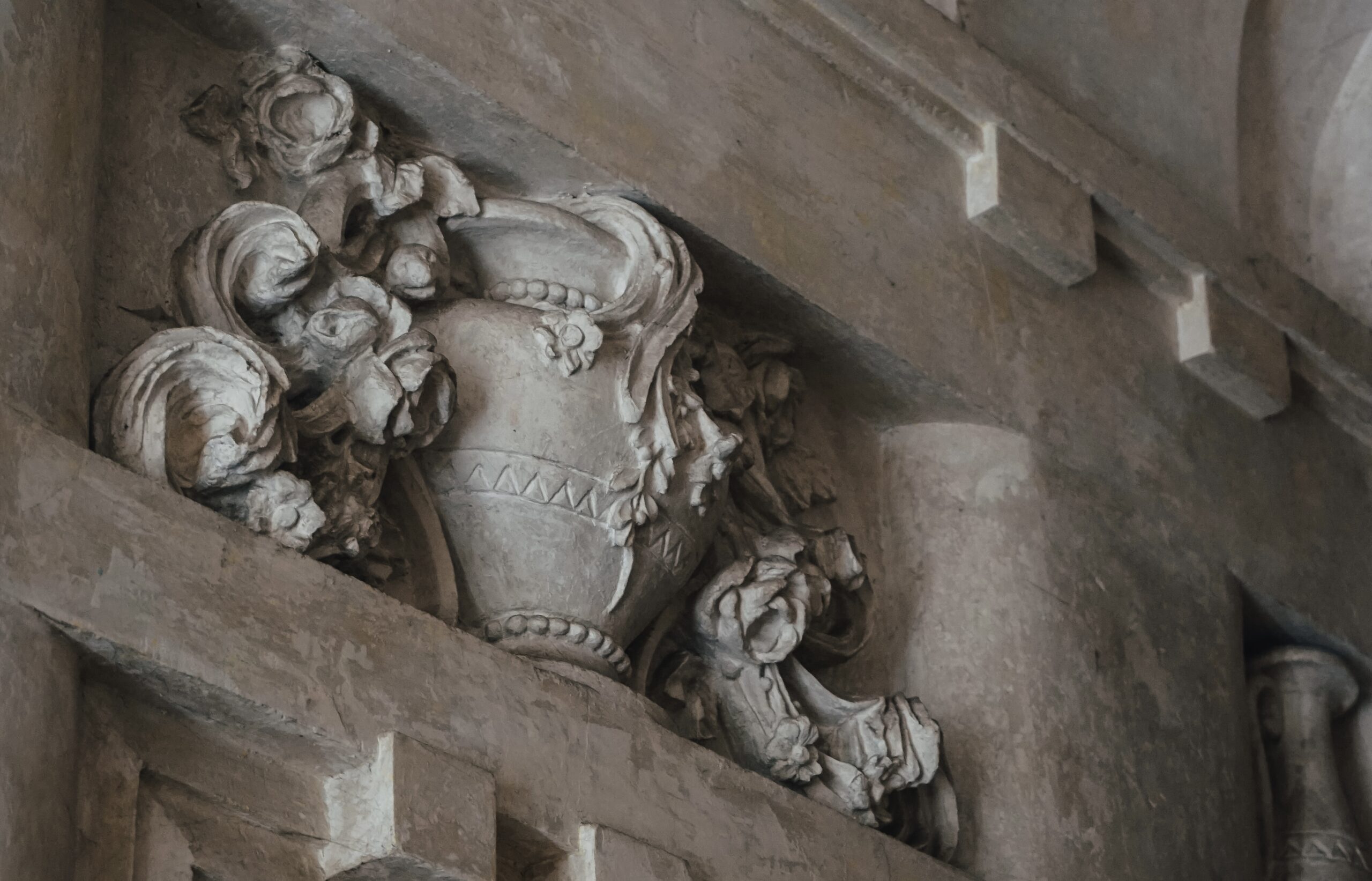
In the buildings of the rational secession (1908-1912), green joinery and bronze details were used. In the interiors, the walls were lined with slabs of artificial marble of various shades or boiserie panels (7 Soborna Square). The floor was laid with ceramic tiles or slabs of artificial stone, terrazzo and mosaic floors were used. Stained glass and paintings acquired monumentality and a variety of solutions, sometimes there are mosaic panels with plant motifs. Brass and bronze details remained popular, and bas-reliefs were tinted, blurring the distinction between painting and sculpture, in keeping with the principle of synthesis of the arts.


The art nouveau style in the interior is about a combination of natural motifs, smooth lines, a wealth of materials and decorative details. He brought special sophistication and uniqueness to every space, paying homage to nature and art. In Lviv, this design was adapted to local conditions, leaving it more restrained, but preserving its sophisticated aesthetics.
Sources and literature: The evolution of polychromy in the architecture of Lviv in the 1870s – 1930s by T. E. Kazantseva;
Hrymalyuk R. Stained glass windows of Lviv at the end of the 19th – beginning of the 20th century.
Photo: Heritage Bureau in Lviv, Oleksandra Provozin, KARP Restorer