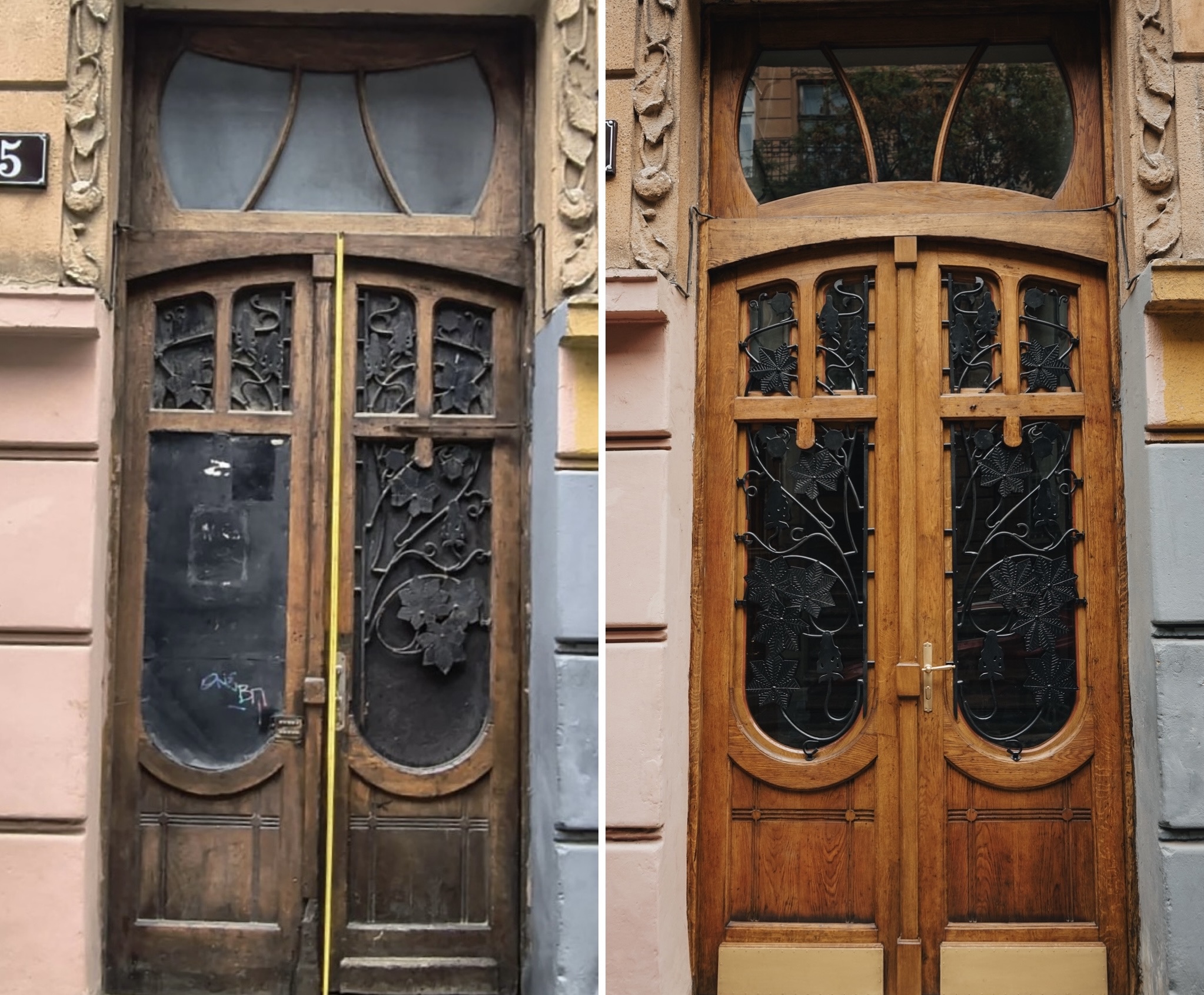
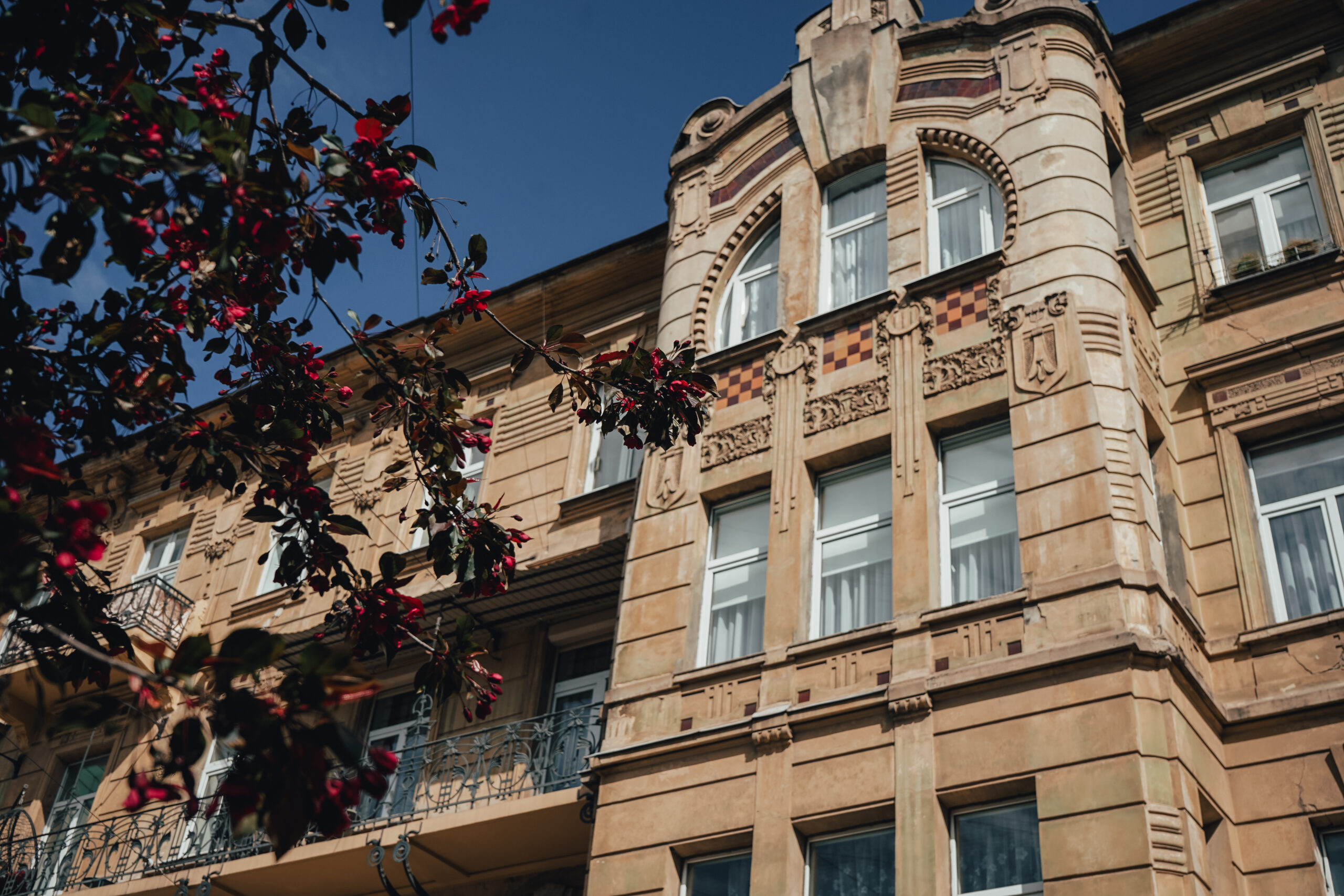
At the turn of the 19th and 20th centuries, Secession—a popular architectural movement—spread across European cities, including Lviv. During this period, decorative and utilitarian metalwork became an essential part of architectural design. Metal was used for balcony balustrades, entrance gates, window and door fittings, jardinières, facade decorations, staircases, weather vanes, and fences. Lviv became a hub for metal craftsmanship, and it was here that Mykhailo Stefanyvskyi—a distinguished Ukrainian artist and craftsman—created his masterpieces.
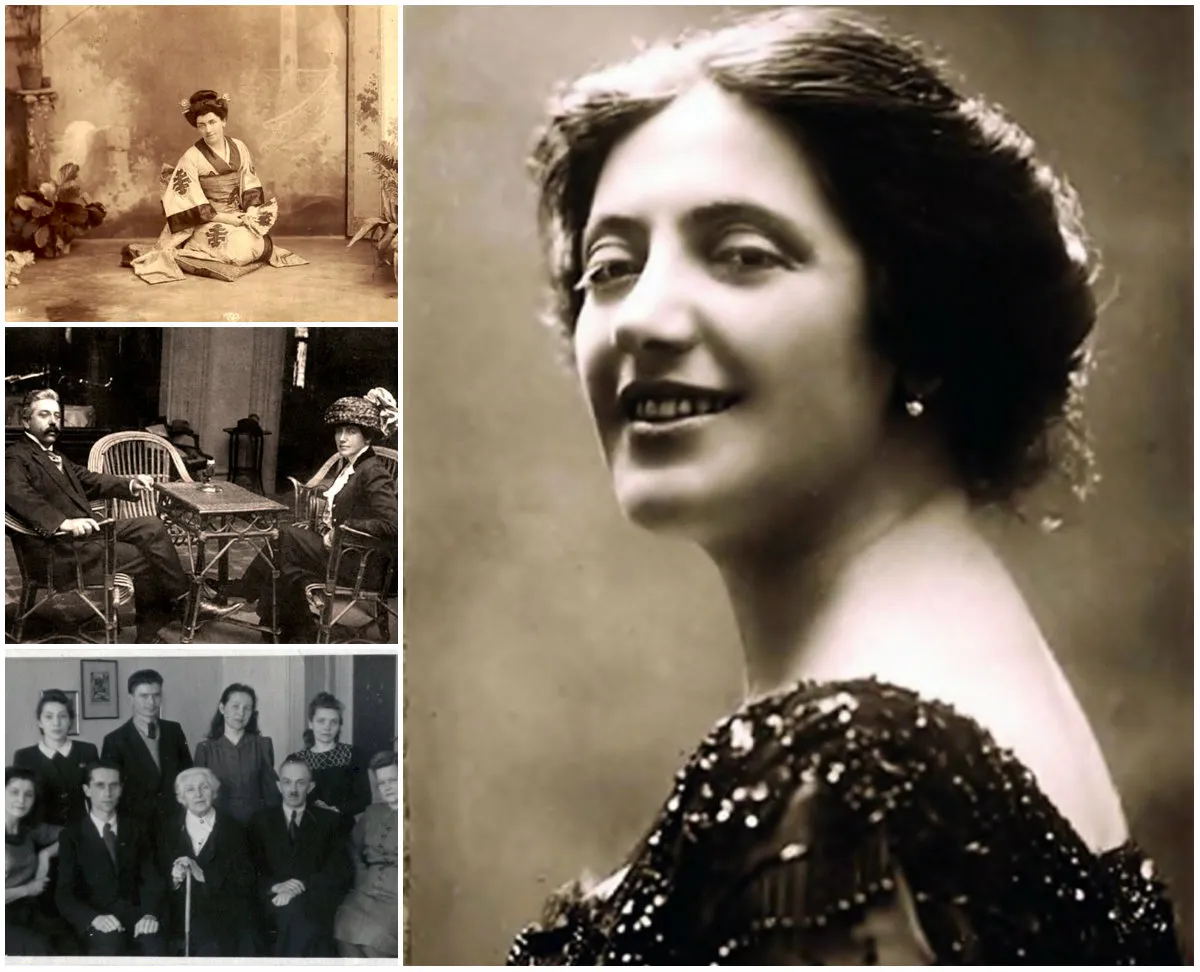
Mykhailo Stefanyvskyi (1878–1952), a native of Bibrka, received his artistic education at the Lviv and Vienna Industrial Schools. After completing his studies, he worked at the renowned Vasika workshop in Lviv and, in 1906, opened his own business. His workshop was initially located at 16 Kopernyka Street before moving to a site between today’s Stepaniivna and Stryiska Streets.
The newly established factory employed 32 craftsmen who specialized in both artistic and utilitarian metalwork. Thanks to advanced technology and Stefanyvskyi’s exceptional skills, he became a leading figure in the field of artistic metalwork.
Stefanyvskyi developed a unique Ukrainian interpretation of Secession, deeply rooted in Hutsul artistic traditions. His works adorn the facades of many Lviv buildings. His factory produced decorative elements for the Bursa Narodny Dim building at 14-14a Lysenka Street, the Dnister Insurance Company at 20 Ruska Street, and numerous residential buildings.
The master also crafted metal elements for churches throughout Galicia. His original crosses, pulpits, fences, and other works bore his distinct artistic signature. Notably, the fence of Lviv’s oldest church, St. Nicholas, was created at Stefanyvskyi’s factory in 1920.
After World War II, Stefanyvskyi’s fate took a tragic turn. In 1951, Soviet authorities arrested him and his wife, Stefaniia. Their library and collection of paintings were destroyed. The factory, which Stefanyvskyi had voluntarily transferred to Lviv University, ceased to exist. He died in exile in 1952.
Despite the Soviet regime’s efforts to erase his legacy, Stefanyvskyi’s works continue to adorn Lviv. A mere glance at the facades of the city’s historic buildings reveals the metal masterpieces he created. He left behind a legacy that embodies Ukrainian Secession at its finest.
References
- Noga O. Mykhailo Stefanyvskyi: The History of His Life and Creative Work. Lviv: Ukrainian Technologies, 2004.
- The Master of Galician Artistic Metalwork