The art style that filled the world at the turn of the 19th and 20th centuries has many names, depending on the country and continent. In Austria-Hungary, to which Galicia then belonged, and, therefore, the capital city of Lviv, the new art – Art Nouveau – was called Secession. Against the background of previous historicism, which used features from past eras, juggling them more or less successfully, a new trend is breaking into artistic life, and especially into architecture, which is also based on ornamentation and decorative art, but does not use the language of past styles, but creates its own unique handwriting.

Secession came to Lviv cautiously and with considerable delay, appearing first in decorative and applied art. From the 1890s to the beginning of the new century, several exhibitions were held in Lviv that demonstrated a new style in ceramics, metal, and weaving. As an exhibit of the National Construction Exhibition of 1894 in Lviv, the 11-meter arched bridge, designed by Maximilian Tullier, demonstrated the possibilities of a new material for construction – reinforced concrete. This material partially replaced brick and wood in construction, allowing the creation of new constructions and the whimsical decoration of facades characteristic of the Secession. The bridge was built in the yard of the Higher Technical School founded in 1877, whose graduate was Ivan Levynskyi, the chief builder of secessionist Lviv. To implement the projects of his architectural bureau, Levynskyi founded a number of factories where all the necessary building materials were produced, starting from bricks and roof ceramics, for the construction of the building, Roman cement, which was well suited for sculptural plastic, ending with metal and „mayolica” pattern elements for details of facades and interiors.

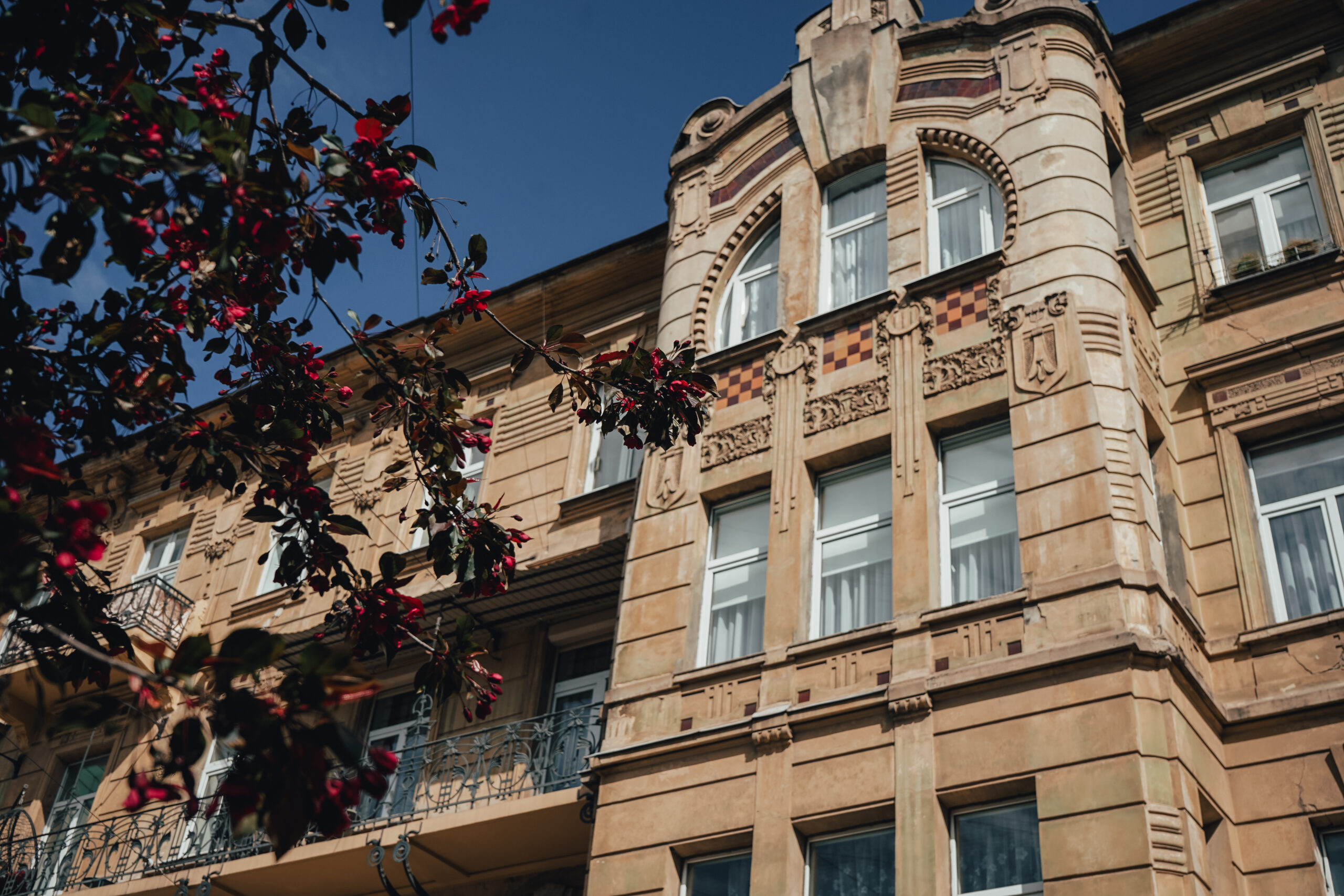
The graduates of the Lviv architectural school, who created secessionist Lviv, were inspired by the work of the leader of the Viennese secession, Otto Wagner, but at the same time they were looking for their own architectural style, based on the synthesis of decorative arts and the architecture and traditions of multicultural Lviv. The Ukrainian Ivan Levynskyi transformed the motives and foundations of the folk wooden architecture of the Carpathians into urban construction, reflecting in the form of roofs reminiscent of wooden churches, the colors and ornamentation of the ceramic and blacksmith decoration of the facades, which he gleaned from the folk art of Hutsul region masters. Polish architects reached out to the traditions of the Tatra Górals. It is also possible to single out Jewish tendencies in the work of Joseph Avin, Armenian notes in the rational secession of the architect of Armenian origin, Oleksandr Varteresevych.

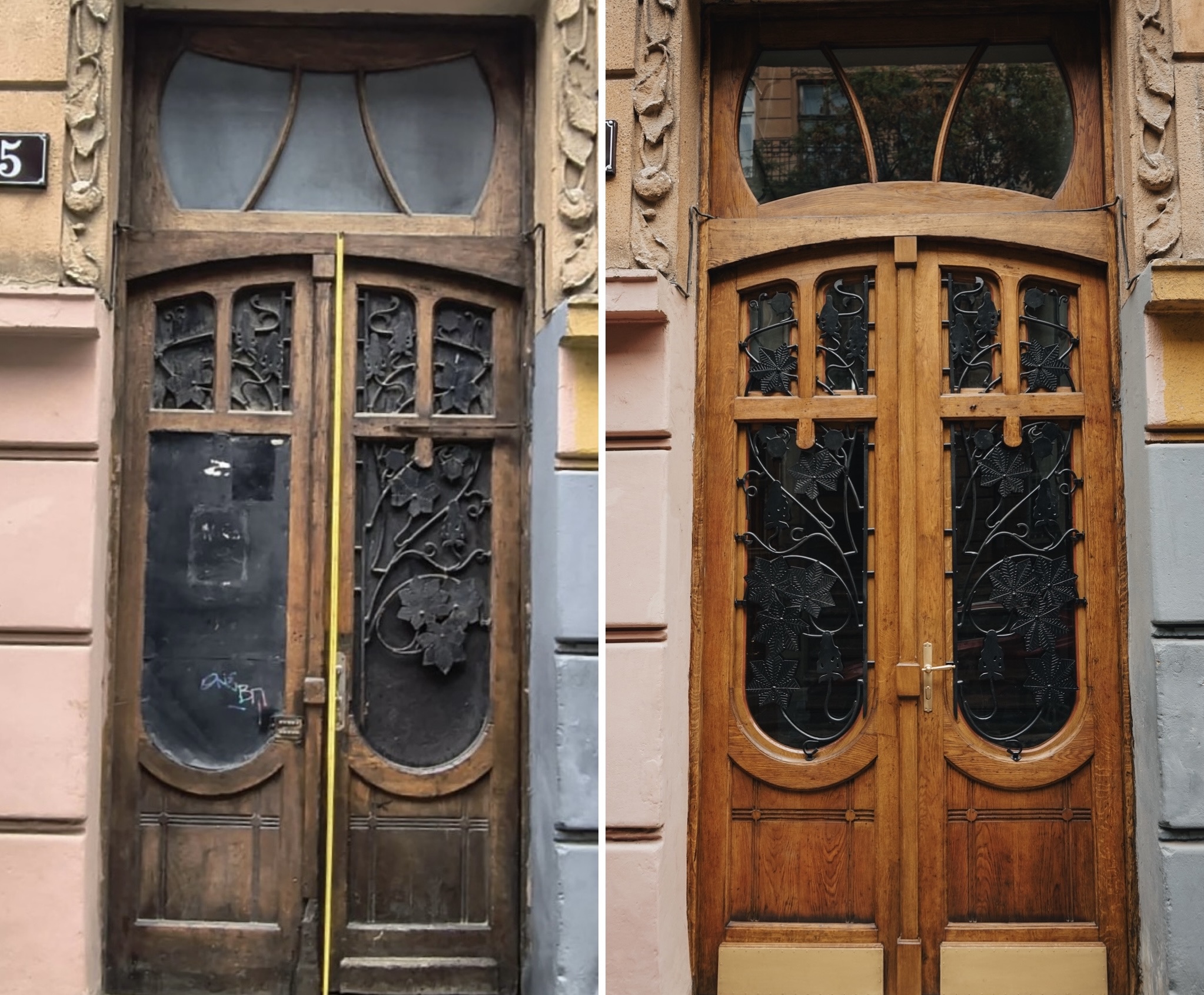
The short period of secession rule, which lasted for three decades before the First World War, was the time of the construction boom in Lviv. Whole blocks, new streets and cour d’honneurs with Art Nouveau buildings appear, the urban space is filled with small architectural forms in the Art Nouveau style: street lighting lamps, gates and fences of front gardens, kiosks, benches, advertising and signs, shop and café windows. Objects of everyday use, furniture, ceramic and glass products, printing, even clothes — were created according to Art Nouveau principles borrowed from nature: plant motives, smooth lines, natural colors, and asymmetry.
Secession in Lviv was a spring burst of nature — a bright event that lasted too short, but left a melancholic nostalgic memory and a visible trace in the urban fabric of the city.
Матеріали: Бюро спадщини, Центр міської історії, Фотографії старого Львова/Materials: Heritage Bureau, City History Center, Photographs of old Lviv.